
by Emma Riva
Cover photo via Silver Eye Center for Photography’s Instagram
People want to be close to other people. Even the most misanthropic of us does, sometimes. Whether it’s through a friend putting a soft hand on your shoulder, a kind word of encouragement during a time of duress, or an unexpected phone call, connection is what keeps us alive.
Before I started Petrichor, up until February of this year, I had a boyfriend that I lived with. We saw each other every day, yet I have to confess I did not feel particularly close to him at many points in our relationship. Since then, I’ve given a lot of thought to the ways we can feel close to each other outside of the couple-form or domestic relationship, which, for all of its benefits, also has many restrictions. Radial Survey Vol III, a biennial exhibition at Silver Eye Center for Photography that I wrote about for Table as well, offers a day-long symposium in which the artists in the show speak to an audience and create a dialogue around their work is a non-hierarchical, communal space for human connection. It augments the already existing intimacy of viewing art by encouraging people to both listen and speak, all while the artists’ creative work surrounds them on the wall space.
Rather than an artist talk, which positions the artist as an authority, the Radial Survey symposium’s non-hierarchical nature felt a little bit more like a university class or a support group. It fell somewhere in between those two, with a reverence for intellectual discussion and a baseline level of respect, but also a warmth, acceptance, and camaraderie from everyone in the room. It also happened to be the same day as the Petrichor launch party, running from 10AM to 3:30PM on 11/3. When I woke up at 8:30AM to make coffee before getting on the 54 bus from the South Side to Garfield, a part of me wondered if it was a good idea to go to a five-and-a-half hour talk before my own party.
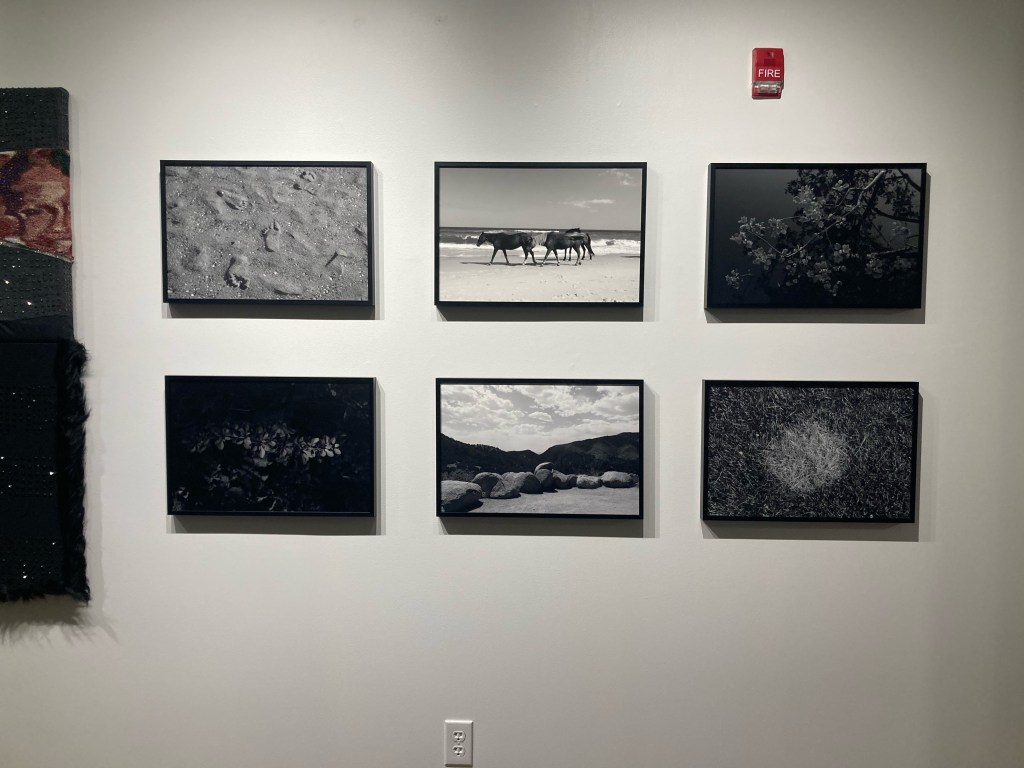
Spoiler alert, it was a great idea. The conversations at the symposium were thought-provoking and powerful. They made me think more deeply about photography as a medium, where much of my own art writing practice has been focused on paintings. if you’re unfamiliar with Radial Survey, my Table write-up gives a bit more of an overview but here’s the rundown: the series features a line-up of contemporary photographers from the 300-mile radius around Pittsburgh, PA. That radius excludes New York and Chicago, allowing for a focus on less-explored regional artistic communities. This year’s featured Akea Brionne, Larry W. Cook, Alanna Fields, Shane Rocheleau, Marissa Long, and Lisa Toboz. All but Cook were in attendance, and the format of the symposium allowed for each person to introduce their work individually, take part in a panel moderated by Leo Hsu and Helen Trompeteler, and then for us all to come together into a circle of chairs to discuss.
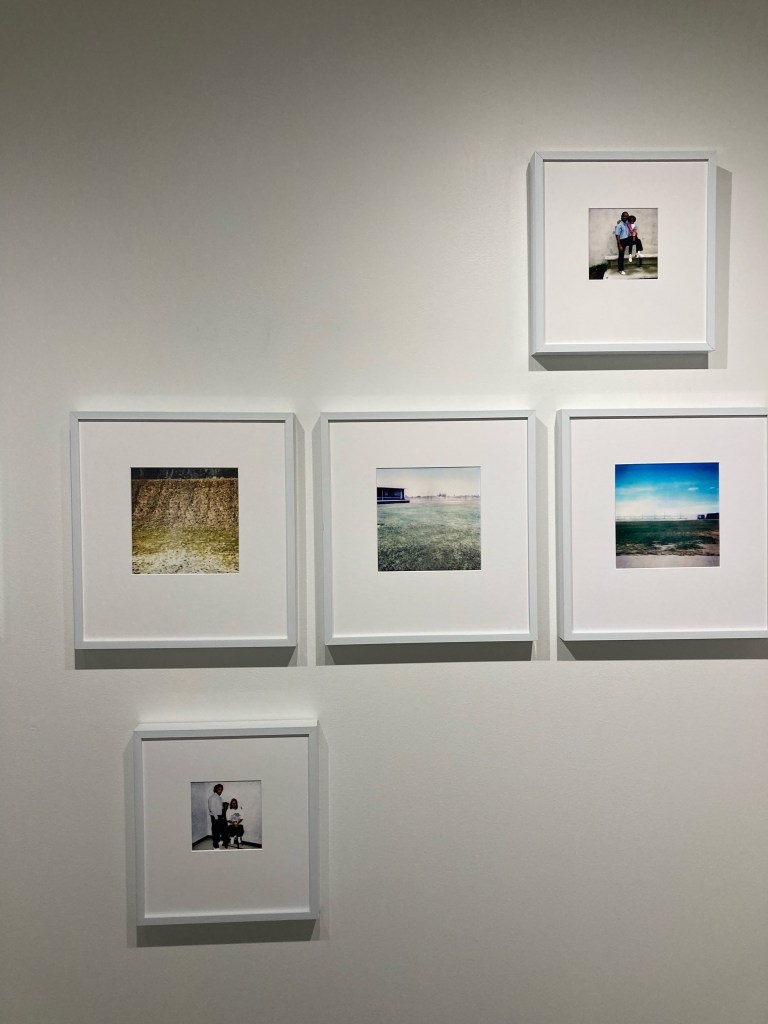
An unexpected theme that emerged was the way photography can create narrative. If you’ve followed my art writing, you know I look for narrative due to my training as a novelist. I came away from the symposium thinking that photography is much closer to fiction than painting is. The way a photographer uses the tools of reality and perception to bring the viewer into a world like our own but not quite. Lisa Toboz, who is also a writer, particularly spoke to this in her Polaroid photos inspired by Victorian ghost photography. Marissa Long also explicitly states the rituals depicted in her photographs and sculptural works are fictional ones, meant to use existing symbols to create a nonexistent reality. This connection between photography and fiction really began to crystallize in my brain when Eduardo Rivera said that “Photography is the lie that tells the truth.” I was told the exact same thing in fiction workshops, just about the craft of fiction.
The symposium also highlighted the value of getting to hear someone speak about their work., I was blown away in particular by Akea Brionne’s words. There are some artists you meet that have a particular gift for speaking about their craft, and Brionne is one of them. I was transfixed every time she spoke. She captured nuance, offered grace, and showed up with both vulnerability and poise. With those artists, you feel in the presence of someone at the top of their game creatively who intimately knows their own mind. Brionne offered that to those present at the symposium.
All the while, I took notes by hand, which resulted in such beautiful anecdotes as: “The novel has multiple people speaking, so the authority of the writer steps back. Radial Survey and Silver Eye’s vision as a whole is unique because it encourages multiple means of [WORD MY HANDWRITING IS TOO BAD FOR ME TO KNOW NOW].” Fill in the blank! Or, if anyone can read this, I’d love to know what it was I was thinking:

I could transcribe every word of my notes, quote people, describe the scene, but one of the most powerful things about the Radial Survey symposium is that there are things about it I can’t or don’t want to write down. Tears were shed, emotions were shared, and sharing that with the public feels inappropriate. In Transforming Vision: Writers on Art, a retrospective of writing on the collection of the Art Institute of Chicago, Edward Hirsch writes: “There is always something transgressive in writing about the visual arts, in approaching the painter, the sculptor, or the photographer’s work in words. A border is crossed, a boundary breached as the writer enters into the spatial realm, traducing an abyss, violating the silent integrity of the pictorial.”
This transgression is, I feel, part of what I love about writing about art, the ways it pushes up against what can’t be put into words, the challenge of showing up to these vulnerable, intimate settings to be moved by the work and the people in them. Sometimes a gallery is a place for free wine and food, to feel fancy or cultured, but other times it lays bare our deep desire to connect with those around us.

I will share one direct quote with you, from Shane Rocheleau: “I don’t know that we have a language for our multiplicities. If we could find a language around contradiction, it would be a lot easier to both give and receive grace. So long as you can’t acknowledge your own complexities, you can’t acknowledge others.’” Even writing this down gives me a slight chill—it moved me. Presence was the stated theme of Radial Survey, Vol III, and the symposium as a practice suggests that sometimes it’s not so much what you say in a space that’s important, but simply being in each other’s presence in it.
Radial Survey is open at Silver Eye Center for Photography through February 3rd.
 PETRICHOR
Leave a comment