
by Zach Hunley
Photo: Installation view of the Associated Artists of Pittsburgh 110th Annual Exhibition. Photo by Zach Hunley.
It was a scorcher of a September afternoon when I visited the 110th Annual Associated Artists of Pittsburgh exhibition, on view at the downtown SPACE gallery through mid-January. I drove across the Warhol Bridge to the Cultural District and into a sea of Pitt fans on their way over to Heinz Field (I know not to call it Acrisure!). It felt like a fitting scene as I stepped into what would be my first encounter with an AAP Annual — one united by a theme of sports.
This curatorial through line had me feeling unsure as to the kind of art I would encounter; when I think of things that remind me of sports, good art has seldom, if ever, converged with those thoughts. I went to school at WVU, known widely (or at least regionally) at one time for its “tradition” of burning couches alongside sporting events. That’s the culture I think of when I think sports — one of petty tribalism and pungently toxic masculinity, or maybe that was the smell of formaldehyde off-gassing from the charred sofas. There are, of course, the Olympic Games, which I have always admired and enjoyed for their pageantry and display ultra-refined athleticism — I suppose there is an art to sports.
What struck me most immediately about this show was its lack of noise. Despite five multimedia video installations, only two contain audio (through headphones). My first response was this is too quiet (though it didn’t help that I was the only visitor in the space). There could have easily been an overwhelming cacophony of buzzers and cheers, whoops and hollers; this was the calmest sporting event I’ve ever attended. On a sensory level, I appreciated this tranquil, almost meditative silence, especially when spending time with the first work in the exhibition, Andrew Julo’s Stonewall League, 2024.
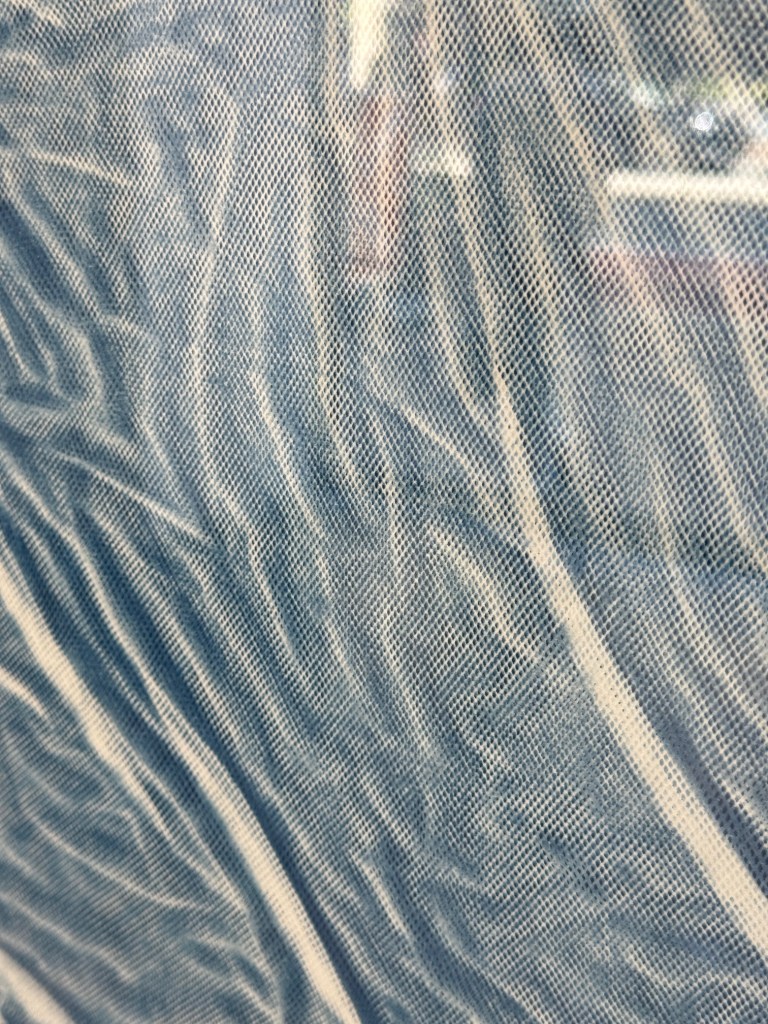
This medium-sized cyanotype flanks the exhibition’s didactic and did not initially hold my attention, but the longer I looked the longer I wanted to keep looking. Julo was able to capture the garment, a simple tank top, in a way that implies both stillness and movement. The details, from the wavy ripples and creases to the rich blue poking out between the tiny gaps in the mesh and the sweeping loops of the arm and neck holes, left me in awe. The piece is mesmerizing and spectacular.
My eyes then fell on what I initially assumed must have been some sort of social practice art (it’s not): a decently large swath of the gallery reserved as a reading area, complete with a wall of sports-related children’s picture books and two large baseball-mitt-shaped chairs atop a turf grass rug. I appreciate the spirit behind the inclusion of such a space (“rest and play,” as the curatorial statement reads), but do not appreciate how it isolates the wonderfully paired work by Joan Green (two impressionistic watercolors) and Sean Hannan (an equally impressionistic video piece). I have no idea what the disco ball is doing in the front corner of this space, either.
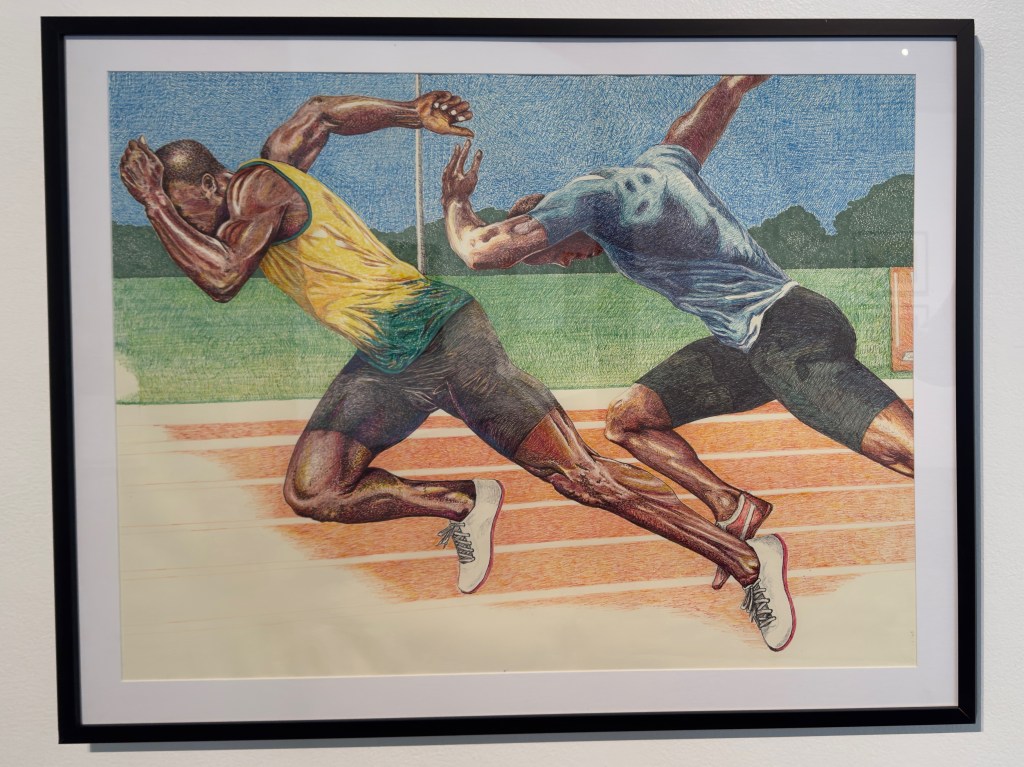
Depictions of the human form were expected in an exhibition of this theme, and they are bountiful. Dino Deluliis’s two large ink on paper drawings GO! and Heavy Hands, both 2023, were particularly striking. They capture a snapshot of athletes, track runners and boxers, in a moment of high energy movement. We see the bodily tension in their muscles and the inertia present in their shifting bodies. These works are technical marvels.
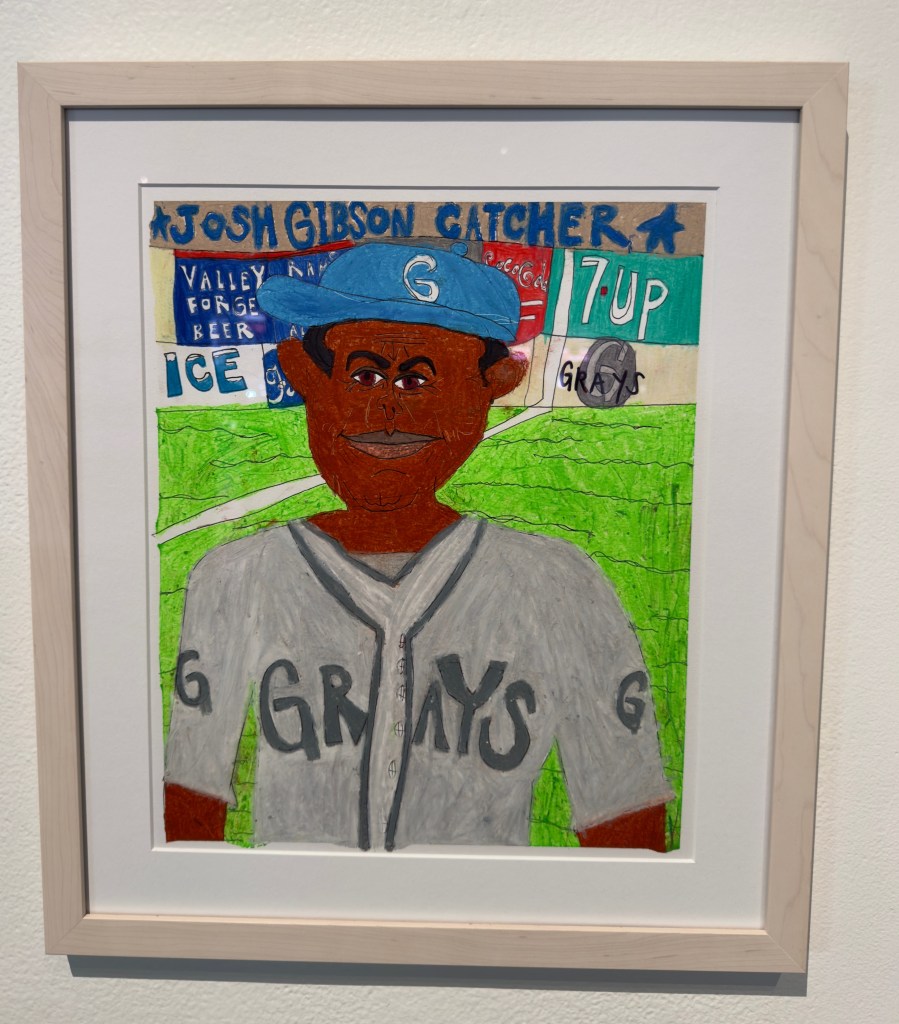
Charlie Wallace’s Homestead Grays, 2024 was next to catch my attention. The artist’s highly expressive and colorful portrait drawings depicting icons across popular culture are always a treat, and this work featuring catcher Josh Gibson is no exception. Wallace gives his subjects bold physical traits that verge on caricature but maintain an earnest level of respect and admiration. His vibrant use of color radiates joy. I’m always eager to see who he’ll draw next.
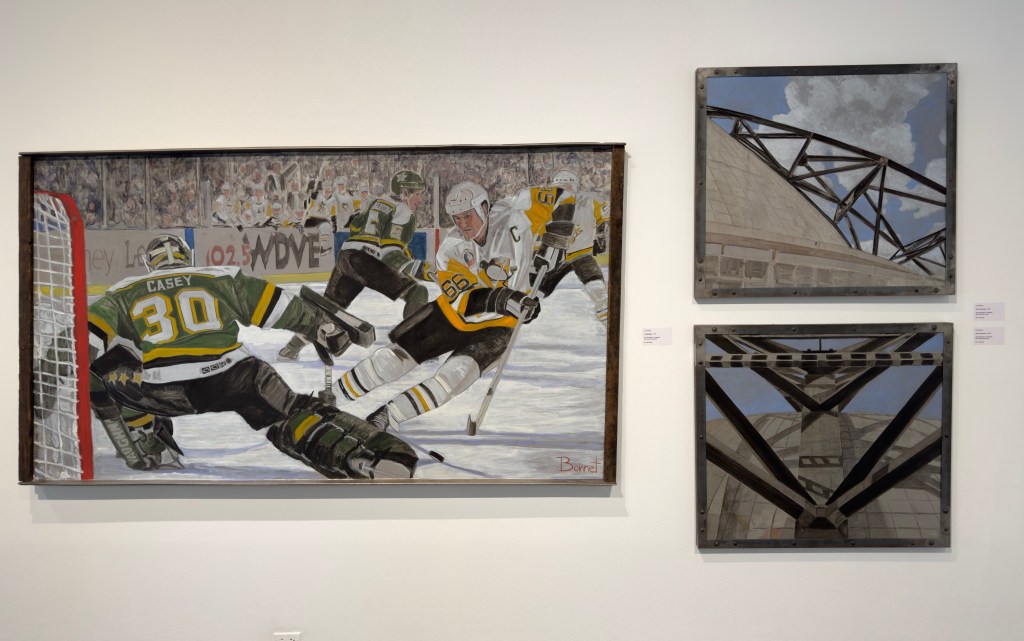
Large-format paintings that really take you in and command attention are always welcome, and Cory Bonnet’s Le Magnifique, 2023 is certainly the standout in this category. Alongside two smaller, boxier scenes of the exterior support structures of the Civic Arena, Bonnet uses actual steel salvaged from the now departed sports complex as the support for his oil and pigment scenes. The result is a flat, matte surface that is highly conducive to such subjects; Le Magnifique portrays the moment before a Penguin’s goal, and the metallic undercurrents bring a wonderful luminous quality to the work. You can almost feel the cold chill of the ice.
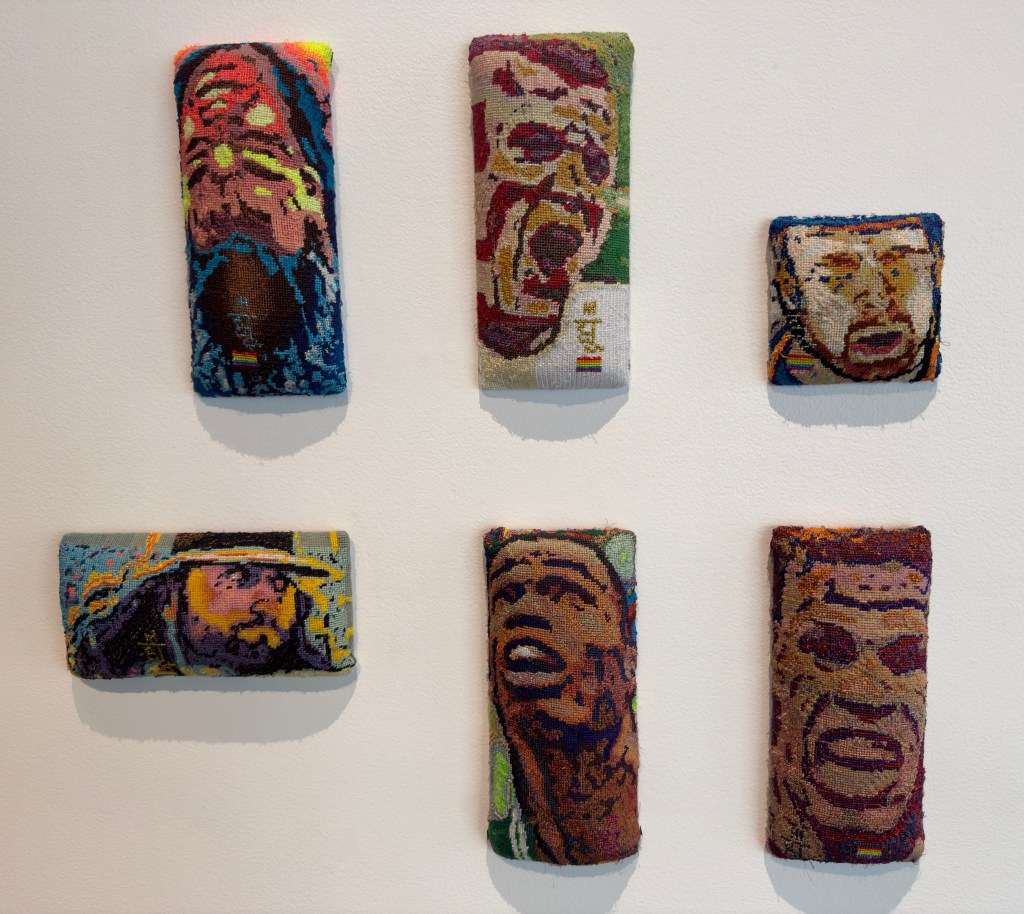
About-facing Bonnet’s paintings I was intrigued by an array of six small portraits done in embroidery. Closely cropped in on the faces of six athletes, Henry Winslow Hallett touches on six distinct sports: baseball, boxing, Olympic diving, basketball, ice hockey, and U.S. football. Each figure appears in a moment of intense focus or exertion. While I was unfamiliar with the names of these athletes, the exception being U.K. diver Tom Daley, the inclusion of small bands from the LGBT pride flag in each queued me in on the athletes’ shared identity as gay men. Neat work.
While in my eyes the literal won over the abstract pieces in this exhibition, there is certainly something for everyone. Of the works I did not touch on in this review, there is also photography, collage, sculpture, and multimedia installations. The program’s legacy and significance speaks for itself — the Annual is one of the longest-running juried exhibitions in the U.S.. The organizers, Anastasia James, Allison Hope Smith Hernandez, and Dr. Sarah Spinner Liska, deserve praise for synthesizing a generally compelling show around a unique topic that will likely stir apprehension from the artier (and typically less athletically inclined, at least speaking for myself) among us. If not the gold, the 110th won me over, anyway.
—
The Associated Artists of Pittsburgh 110th Annual Exhibition is on view at SPACE, 812 Liberty Ave. through January 12, 2025. Gallery hours are Wednesday – Sunday, 11am-5pm, closed 12-1:30pm. On Friday, October 25, 5:30-8:30pm, the Pittsburgh Cultural Trust will host the free event “Art Olympics,” at The Backyard, 8th & Penn. Ave., alongside the October Gallery Crawl downtown from 5:30-9pm. More information can be found at TrustArts.org/Crawl
Zach Hunley (they/he) is a Pittsburgh-based modern and contemporary art historian, critic, photographer, collector of things, and proud father to a senior guinea pig. With a keen observational eye, they use their writing as a means to refract their deep appreciation for formal aesthetics through a socially engaged lens. They hold an M.A. in Art History from West Virginia University, Morgantown, WV.
 PETRICHOR
Leave a comment