by Zach Hunley
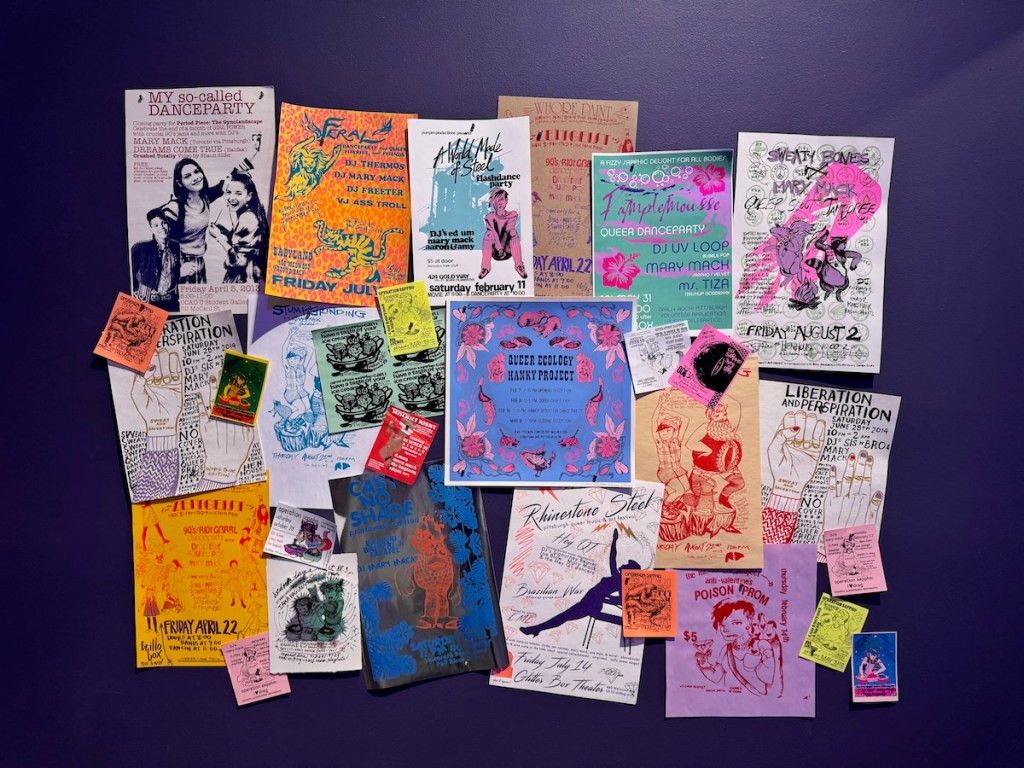
Cover image: Queer Dance Party Promo (2006 – 2024), Mary Tremonte
I spent twenty-one years of my life in the closet. It was a dark place to be for such a long time. It felt all the ways so many other queer people have articulated: lonely, scary, violent… As I’ve gotten older and spent more time as a writer, I realize that shedding light on queerness with language only manages to grasp a small part of what it means to be queer; what it feels like to be queer; and the preciseness in how queer embodiment can change your relationship with others, and with yourself. Really, all queerness needs to emerge is space and light.
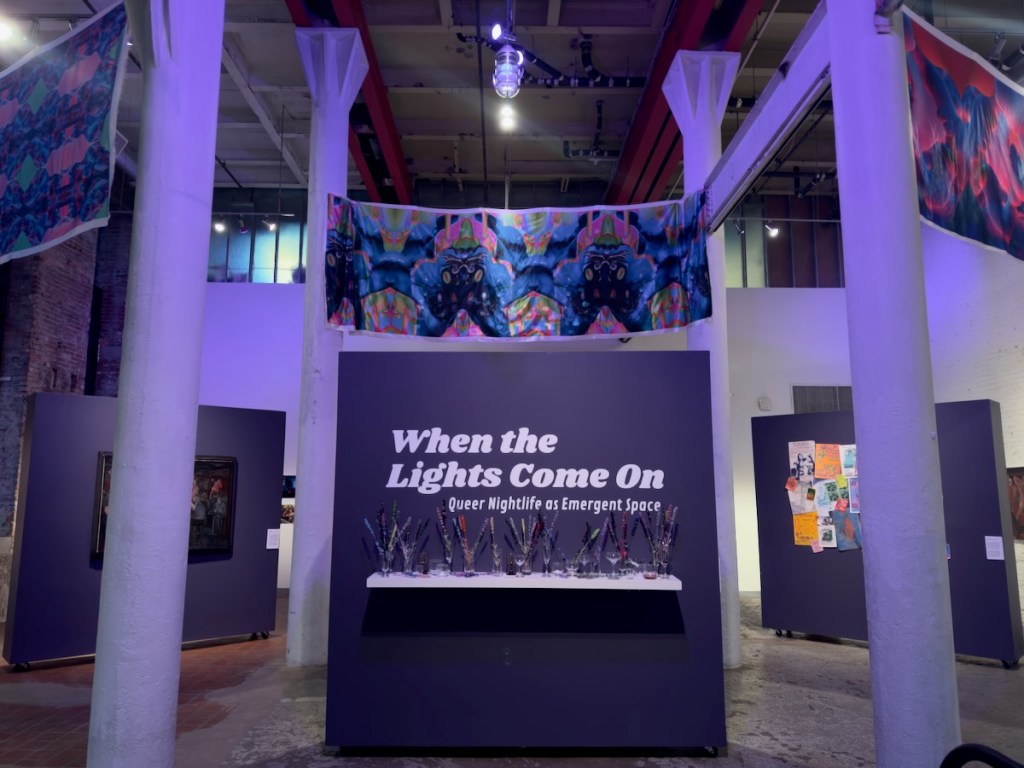
The group show of twelve artists, When the Lights Come On: Queer Nightlife as Emergent Space, on view at the South Side’s Brew House Arts through March 22, celebrates this making of space by investing queer nightlife’s function as a site wherein queer identity, queer expression, and queer celebration rise and commingle.
The atmosphere cultivated within this exhibition was felt immediately as I passed through the threshold, out of the gloomy grey Pittsburgh winter evening and into the bright warmth of Brew House Art’s impressive gallery space. You are greeted by a multicolor array of beaded lavender stems propped up in an eclectic collection of glass drink ware. This work, Last Dance (2025) by Théo Bignon, distills several themes investigated by artists across the exhibition: the beauty in community and the power of coming together.
This marked my first time visiting Brew House, and I am glad the timing aligned with this show in particular. I was struck by the gallery’s towering ceilings, and next directed my gaze upwards to find the colorful work of Jules Malice. Comprised of four printed satin tapestries (Look Inside, The Source, Inner Working I and II all 2024) glimmering with prismatic light cast by projected video (Inside of the Rock, 2022), this vertical extension of the exhibition space felt like stained glass atop the vaulted heights of a cathedral devoted to queer existence.
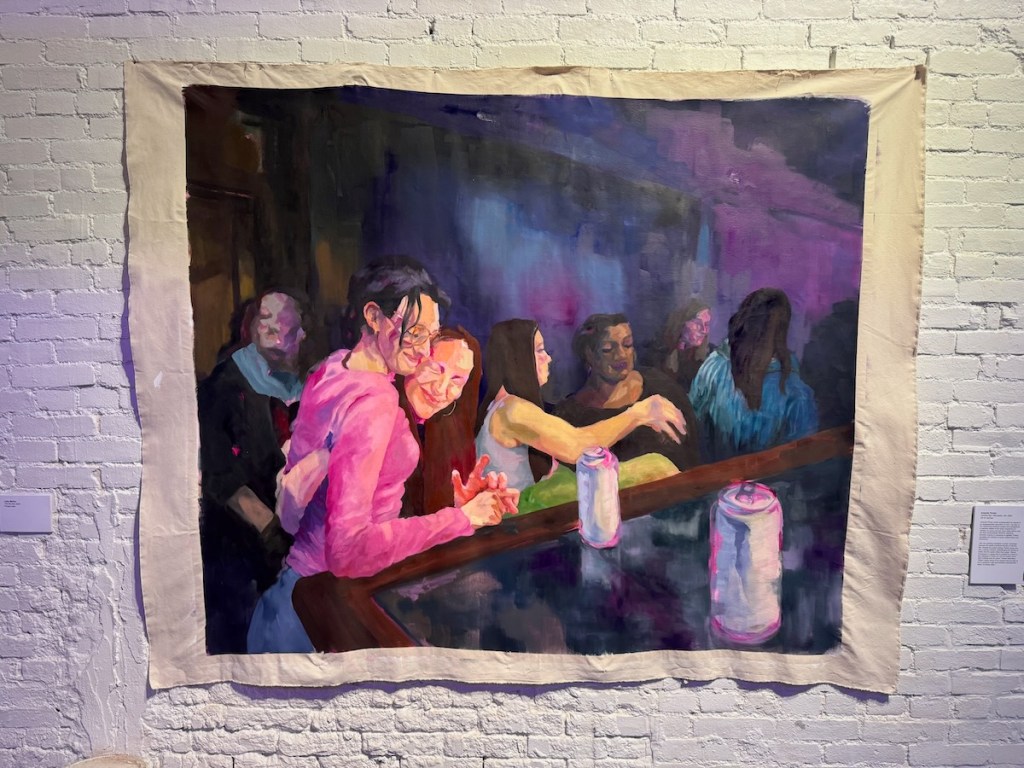
Representations of the queer body engaging in acts of queer of love and play abound, depicted in mediums ranging from ink on paper, digital drawing, prints, and oil on canvas, all radiate expressive color. I quite enjoyed the paintings in this show: three from Clint Fisher and one from Amanda Pickler. The latter, Femme Bar, Worcester, MA (2024) is a stunning, unstretched canvas featuring a lesbian couple in the middle of a close embrace at the corner of a bar, their facial expressions signaling content, joy, and relief all at once.
Fisher’s contributions — Saturday Night (2024), Peter (2021), and the intricately composed Last Dance Last Chance at Lucky’s (2020) — position viewers as voyeurs in scenes of the local gay dance club. I love Fisher’s application of paint in these works, and felt like they were mural like in their washy flatness; the wall label for Last Dance… revealed he is, indeed, an accomplished muralist, with work at Club Pittsburgh. I’ve not yet made a visit to that establishment, but now it may be time to investigate — for the sake of art! Read in concert, Fisher and Pickler’s approach to color and form recall the work of someone like Nicole Eisenman.

The multimedia installations in this show were another highlight, with work by Harrison Apple and Nica Ross providing space for viewer participation. Apple’s multifaceted work Playback is Endurance (2024) highlights their vital work as co-founder of the Pittsburgh Queer History Project by opening a select chapter of the queer historical archive — a mail order tape service featuring musical performances by a variety of familiar names, interspersed with Apple’s informational how-to guide for cleaning VHS tape.
This opens up queer history to contemplation within our present moment, “highlighting our motives and impact as recipients of inherited memories.” I love that the contents of the VHS player’s housing are made visible; I felt like Björk peering into the contents of her CRT TV, seeing the little “city” inside. Ross’s Eyeball Palace (2025) centers the viewer as its subject to highlight the forces at play in shaping queer subjecthood. By re-presenting our form through a matrix of technology, the interface becomes a means for the making and remaking of the self. With our image and movement captured at a slight delay, it becomes an opportunity to dance with and encounter, not quite your own reflection, but a disembodied version of your physical essence. The work is also unabashedly playful and humorous.

The fleeting, ephemeral nature of queer experience and exaltation are other topics centered across this exhibition, but is read most readily in work such as True T PGH’s Memories of Opening Night (2025), sarah huny young’s photographic array of Honcho Campout (2023-4), and Mary Tremonte’s Queer Danceparty Promo (2006-2024). young’s photos beautifully and powerfully capture moments of intimacy and community at a yearly festival gathering of queer folks, speaking to the spiritual power of togetherness among nature music, and dance. Tremonte’s prints are scattered and posted to wall in the gallery and stands as a time capsule of past dance parties she’s collaboratively hosted and DJ’d.
The collection not only showcases her prowess in design across a variety of printed mediums, but serves as a monument to her longstanding commitment to fostering community and space for queer expression. True T PGH’s contribution to the exhibition is a pedestal of ephemera from the collective’s opening reception performance featuring Kiss Ebony, D’Nico Ebony, and Dior Balenciaga. Trophies from past ballroom competitions and a foldable fan emblazoned with “CREATORS,” all left by the trio, serve as totems for fleeting moments of queer expression, “radical pleasure and liberation.” As a whole, these works convey elements of queer resiliency and the variety of ways in which we create the means for our existence.
For what felt like a joyous expression of queerness and its variety of eclectic forms, there was a certain and undeniable stillness and silence which permeates this exhibition. Perhaps it was the result of seeing this exhibition by myself in the space, I certainly wish I would have been at the lively opening celebration, but this atmosphere felt poignant, haunting even, given the present frailty of LGBTQ+ rights in this country.
I exited the color and light of the gallery back into the cold, dark uncertainty of the world, and wanted to turn back. It’s vital that exhibitions such as these continue onward, that art like this is made and triumphed, in spite of what goes on outside. Queerness is the result of standing at odds with existing systems, and we have no choice as queer folk but to continue illuminating our spaces, our sacred places, to banish the shadows of those who seek to diminish our light and our warmth.
—
When the Lights Come On: Queer Nightlife as Emergent Space, curated by Hannah Turpin, is on view at Brew House arts through March 22. Gallery Hours are Thursday, 2-7 pm, Friday and Saturday, 11 am – 4 pm.
Zach Hunley (they/he) is a Pittsburgh-based modern and contemporary art historian, critic, photographer, collector of things, and proud father to a senior guinea pig. With a keen observational eye, they use their writing as a means to refract their deep appreciation for formal aesthetics through a socially engaged lens. They hold an M.A. in Art History from West Virginia University, Morgantown, WV, and currently docent for the Troy Hill Art Houses.
 PETRICHOR
Leave a comment