
I still remember the first painting I bought—your reality, my reality by Zulimar Mendoza. It was at Venezuela Art Fair at One Art Space in New York—I was covering the show for UP Magazine. After a brief break, I had started writing for UP again and Venezuela Art Fair was my first story back on the team after a short break. It was summer, and I had just decided to move to Pittsburgh in August on a whim, with no real sense of why. I had quit my job at a department store but was optimistic about UP, an instinct that turned out to be wise to follow. In the meantime, I crashed at my parents’ apartment in Washington Heights.
Looking at your reality, my reality, something clicked for me: I could buy that painting. It wasn’t just for me to look at during the show. I could take it home with me. I remember thinking to myself “Am I really the kind of person who buys painting? I had nowhere to put it. I agonized over the decision to friends via text, but I’ve come to realize that sort of agony over whether to do something almost always means you’ve already made up your mind. I sent Zulimar the money over Zelle and took the painting home.
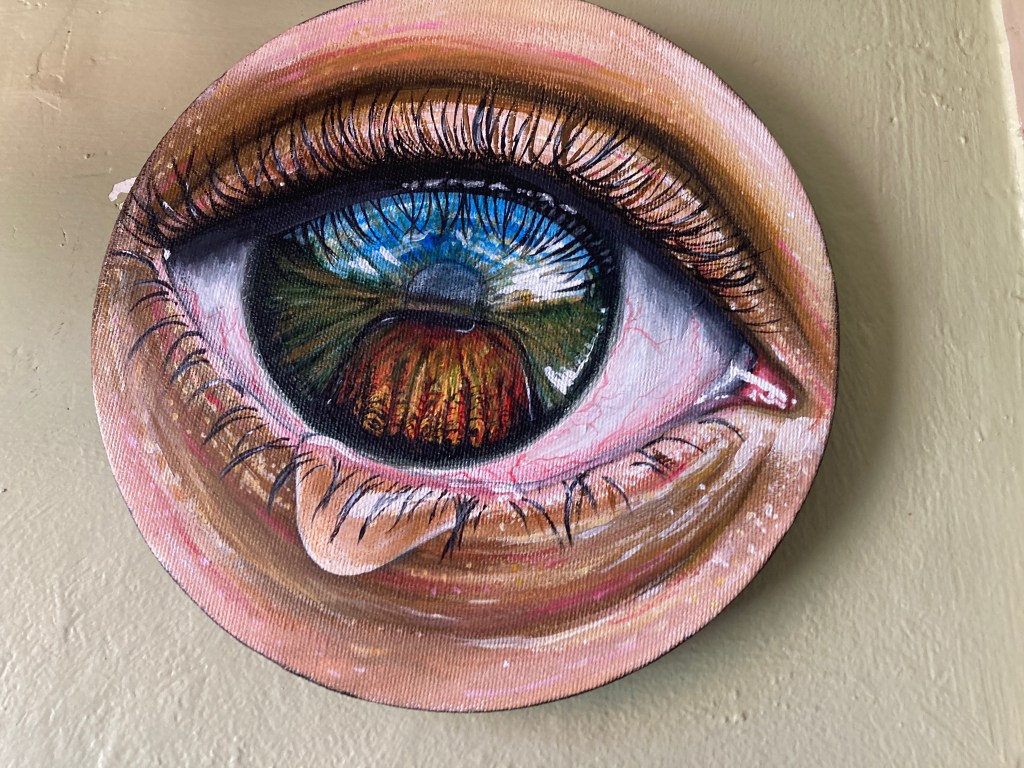
The first thing I remember buying with “my own” money as a teenager was fencing gear. (Not counting the ice cream I bought from a cart in the playground with one-dollar bills when I was 11). I worked as an assistant teacher and badly wanted my own jacket and pants that fit better rather than the boxy team-assigned ones. I went with my dad to Blue Gauntlet in New Jersey and watched them fit a jacket with my name on the back. I bring this up to say that maybe I was destined to start an art collection, buying things that aren’t useful or decadent but that have some sort of personal meaning. Things that fit me.

I saw Aletheia’s Terroir in a 2023 show called Mystical Beings while I was couch-surfing after some tumult in my personal life that resulted in needing to move apartments. Though at the time I was running on adrenaline, I can see now that I was scared. The face of the figure in Terroir reminded me not to look back. It was how I felt, small and afraid among the world’s wonders, not sure whether to be moved by them or cower. I bought it in two installments. My rent had almost doubled and I had to buy nearly all new furniture. This was, by all accounts, a poor financial move, but the moment I saw Terroir I needed it. I carried it home in my lap, from Sharpsburg to South Side on the 91 and 48 buses. Aletheia was the first person to say I was a “collector.” I rolled my eyes—Who, me? The term felt so laden with class implications. I buy Giant Eagle brand beans instead of Goya to save $1.60. But she was right.

Later in 2023, I bought West of Eden by Corey Ochai, before leaving for a monthlong work exchange trip, because I wanted to come home to it. I had been waiting for the right time to buy one of Ochai’s pieces, as he is a good friend, and then felt right. I knew I wanted to see it a month later when I returned, and I did.
Sometimes I buy because of a connection with the artist—I was so overwhelmed by the great conversation I had with Cleveland-based artist Danielle Mužina that I knew I had to have a piece of hers. Or the art comes out of a long-standing personal relationship—my house may as well be called the Grant Catton Museum of Art. Or it’s a way of thanking them for their time when they’ve given me a particularly great interview, especially if the conversation gives me newfound appreciation for their work. I own an edition of Leah Patgorski’s that I saw during a studio visit.
During the launch party for this very magazine, I took a stroll down Penn Avenue and ducked into Bridget Gettys’s solo exhibition at Bunker Projects. Something about this painting just moved me, and Bridget and I had really connected over a shared experience of chronic pelvic pain. Something just moved me about the painting. That’s the best way to describe it.
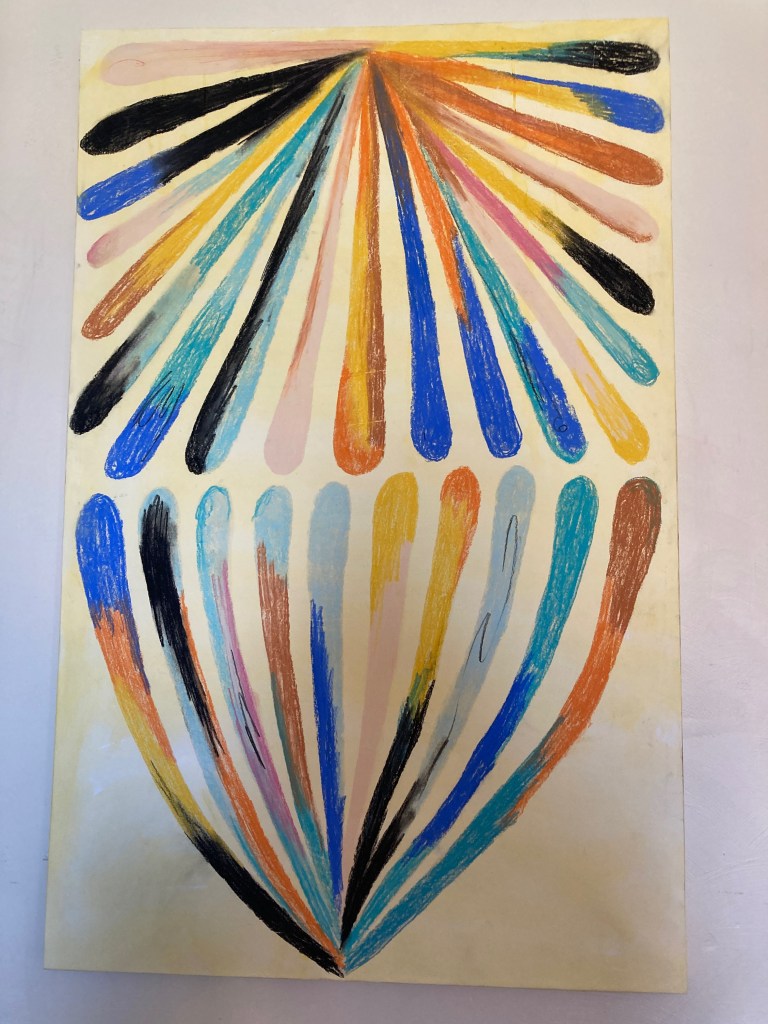
I was kind of drunk. I really wanted the piece. I Venmo’d the artist and laid awake that night panicking at my precarious finances. But I found a job at the Carnegie Museum of Art, surrounded by beautiful work all day, and moved on to buy more work. I cooled it a little bit when I changed jobs again, but being around works of art all day made me develop personal relationships to works in the museum.
Having art in your home is intimate. You live with works of art, every day. I don’t own a car or a home, or even a particularly nice set of kitchen plates, but I own quite a lot of paintings. Maybe that’s strange, or an unwise investment. But it’s a statement of what I value—beauty, creativity, love, passion. There are times when money is more for necessity, just to keep the lights on and the bills paid. But artists’ work is not meant to sit in vaults forever. And nothing I bought was astronomically expensive; sure, not the price of everyday purchases, but not Art Basel amounts of money. If you’re in the position to buy artwork, living with art is one of life’s greatest joys.
Emma Riva is the founder of Petrichor.
Want to see new works in an old collection? This month’s articles are published with support from The Frick Pittsburgh for Kara Walker: Harper’s Pictorial History of the Civil War (Annotated). As Zach Hunley wrote in Petrichor: “When viewing the work of Kara Walker, you are bearing witness to history and time compounded.” Revisit the past and rethink the present now at the Frick Art Museum.

 PETRICHOR
Leave a comment