by Patrick Fisher
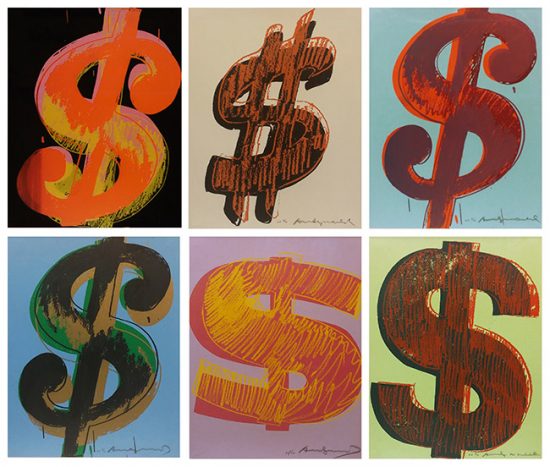
Image: Andy Warhol, Dollar Sign Portfolios, 1982
Petrichor‘s free discussion with financial advisor Annahid Samiljan and art advisor Brian Lang, “Financial Health for Creatives,” will be at Atithi Studios on Thursday, October 9 at 6PM. Greater Pittsburgh Arts Council has generously offered their perspective on this topic to give attendees some ideas of what to ask about!
Financial wellness can feel like an elusive goal for many artists, especially those operating in low-to-medium income brackets. The pervasive myth of the “starving artist” suggests that financial uncertainty is a natural state for creatives. But this narrative isn’t just limiting, it’s harmful. By embracing proven financial principles and practices, artists can challenge this trope and build lasting financial security.
Scott Galloway, a professor of marketing at NYU Stern School of Business, entrepreneur, and author, is renowned for his incisive insights on personal wealth, business strategy, and economic trends. His latest book, The Algebra of Wealth: A Simple Formula for Financial Security, distills decades of research and experience into a practical framework for financial success. While Galloway often addresses a broad audience, his advice is deeply relevant to anyone striving for financial independence in an unpredictable field, including artists. Here, we’ll explore his insights and apply them to the unique challenges faced by creatives.
Why Wealth Building Matters
Wealth building is often a polarizing topic, particularly in artistic communities where financial discussions can feel disconnected from creative values. However, the reality is that no one wants to be working until they are 75 out of financial necessity. The only way to guard against this future is to create a stable financial foundation today. Wealth building isn’t about chasing extravagance, being exploitative, or perpetuating greed; it’s about cultivating agency, security, and the freedom to focus on what matters most to you without constant economic anxiety.
Key Principles from The Algebra of Wealth
Galloway’s formula for financial security rests on four key pillars:
- Focus: Develop a long-term mindset and prioritize high-value activities.
- Frugality: Live within your means to save and invest consistently.
- Investment: Put your money to work in ways that generate growth over time.
- Time: Recognize the exponential impact of compounding and start as early as possible.
Here’s how these principles can translate into actionable strategies for artists.
Build Your Skill and Narrative
A strong personal narrative and distinct skill set can elevate how much you can charge for your work and time. By honing what sets you apart and finding ways to communicate your unique value, you can create opportunities to diversify your income while growing your reputation.
- Actionable Recommendation: Reflect on what makes your artistry unique. Consider developing a series, writing about your process, or offering workshops that highlight your distinct perspective. Seek opportunities to share your narrative through interviews, social media, or local events.
- Example: A ceramic artist with a passion for sustainability could create a series using locally sourced clay and recycled materials. They might host workshops on eco-friendly practices in ceramics and write about their approach online. These efforts could lead to partnerships, teaching opportunities, and higher-priced commissions based on their specialized focus.
Develop a Long-Term Mindset
Artists often face unpredictable income streams, making it essential to plan beyond immediate needs. Galloway emphasizes the power of thinking long term and setting measurable financial goals.
- Recommendation: Identify a “number” that represents financial security for you, whether it’s saving for six months of living expenses, retiring at a certain age, or funding a passion project. Break this goal into smaller, achievable milestones.
- Example: An artist earning $30,000 annually might aim to save $5,000 over three years for an emergency fund. Setting aside $32 per week makes this goal achievable. Placing these savings in a high-yield savings account, such as Upgrade, or a money market account, such as Fidelity Cash Management, can also help combat the compounding effects of inflation while allowing easy access without penalties.
Practice Frugality Without Sacrificing Quality
Living within your means doesn’t mean abandoning joy or creativity. It’s about making intentional choices that prioritize long-term stability while supporting your artistic practice.
- Recommendation: Use a free mobile app like NerdWallet or YNAB (You Need A Budget) to analyze cash flow, measure assets, and categorize expenses. These tools can help you identify areas of excessive spending and distinguish between needs and wants, allowing for adjustments that don’t compromise your craft.
- Example: After using a budgeting app, an artist might realize they’re spending significantly on dining out. By redirecting $50 a month from dining to a dedicated art supply fund, they can maintain their practice without feeling deprived.
Leverage Time and Compounding
Time is one of the most powerful factors in wealth building. Even small, consistent contributions to savings or investments grow significantly over years.
- Recommendation: Open a Roth IRA or similar retirement account and commit to contributing even modest amounts regularly. Roth IRAs have significant tax advantages; contributions are made with after-tax dollars, and the money earned is tax-exempt, meaning withdrawals in retirement are entirely tax-free. Platforms like Interactive Brokers or Vanguard offer beginner-friendly options.
- Example: Contributing just $50 a month to an account with a 7% annual return can grow to nearly $24,000 over 20 years.
Consider a Health Savings Account
For artists without traditional health insurance, a Health Savings Account (HSA) can be a valuable tool for managing health-care costs and building financial security. HSAs offer triple tax advantages: contributions are tax-deductible, growth is tax-free, and withdrawals for qualified medical expenses are also tax-free. Funds roll over year-to-year, allowing you to save for future healthcare needs.
- Recommendation: Use an HSA to cover routine medical expenses and save receipts for reimbursements. Consider investing unused funds within the account for long-term growth.
- Example: An artist contributes $100 monthly to an HSA, using it for annual check-ups and saving the remainder. Over a decade, these contributions grow tax-free, providing a safety net for unexpected medical costs.
Additional Habits for Financial Agency
- Automate Savings: Set up automatic transfers from your income to savings or investment accounts. This removes the burden of decision-making and ensures consistency.
- Round Up: Utilizing round-up features when making purchases with a debit card can be an effective way to grow your savings without significant effort. Many financial institutions and apps offer options to round each transaction to the nearest dollar and deposit the difference into a savings account.
- Seek Financial Education: There are nonprofits that offer free or low-cost resources or workshops on financial literacy and managing money.
- Seek Out Reliable Financial Resources. Staying informed helps you make stronger decisions and adapt to changing conditions. Bookmark the Greater Pittsburgh Arts Council’s new resource site, PGH Art Hub, which will continue to be expanded with additional financial resources in the coming months.
Financial security doesn’t happen overnight. It’s the result of steady habits that build stability and independence over time. Small steps like setting up automatic savings, using round-up features, and learning more about managing your funds can help rewrite the narrative of the “starving artist” into one of confidence and creative freedom. These everyday choices, while simple, create a foundation that supports both your artistry and your well-being, enabling you to focus on what matters most: your creative passions and goals.
Take the first step today. As the saying goes, “The best time to start investing was yesterday. The second best time to start investing is today.” Start by setting up an automatic savings plan or activating a round-up feature through your bank. Take 30 minutes to explore free financial apps or resources, such as budgeting tools or workshops offered by local organizations. Each action you take, no matter how small, is an investment in your future self. Begin your journey now, and let the changes you make today grow into a future filled with financial independence and creative prosperity.
Patrick Fisher is an arts advocate serving as the CEO of Greater Pittsburgh Arts Council.
This article has been published thanks to the Greater Pittsburgh Arts Council, an arts agency working to build a more resourced, connected, and informed arts sector, empowering artists and arts organizations throughout Southwestern PA. Learn more at pittsburghartscouncil.org.
 PETRICHOR
Leave a comment