Interview with Barbara Weissberger and Paolo Piscitelli / Conducted by Emma Riva
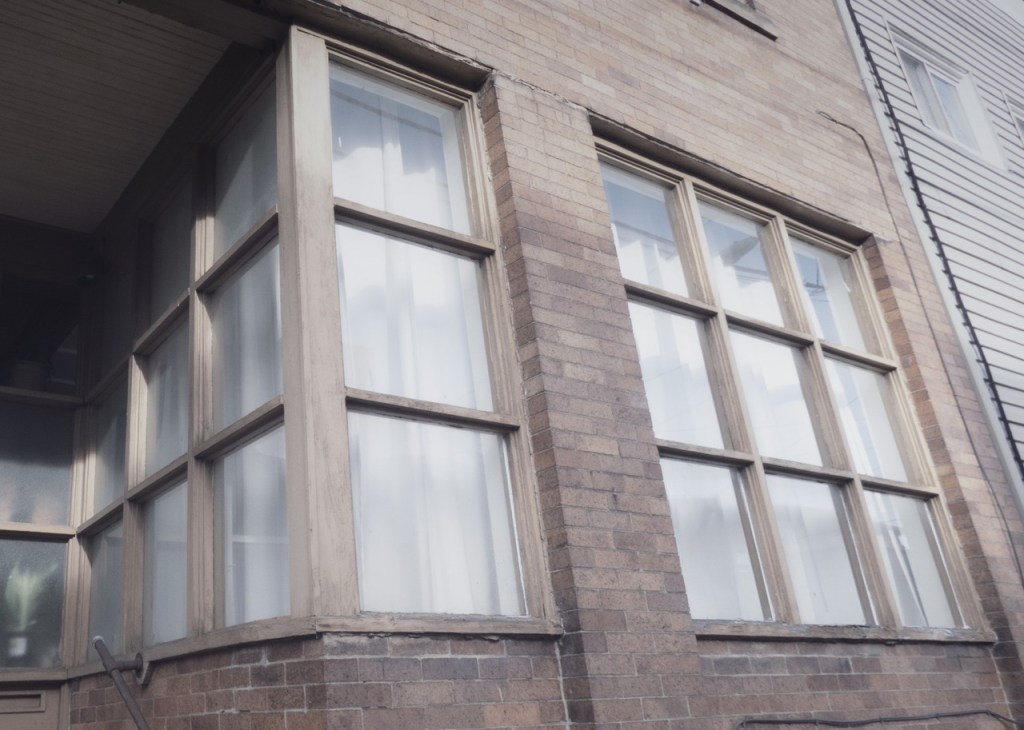
Image: Piscitelli’s sunroom. where the show will take place.
Paolo Piscitelli wants to invite viewers to slow down. We live in an overstimulated world, with our poor monkey brains zapped with constant streams of information. On social media, I can look at hundreds of images in a matter of minutes. A new initiative from Piscitelli, Two Works on Sunday, will show visitors only two objects as stimuli. Your eyes will have to settle on what’s in front of you. And the viewing experience is not in a gallery but in a home, where there is no context or pretense. The invitation is just to see and experience.
Though Piscitelli plans for this to be a series of multiple events, the first iteration features photo and textile artist Barbara Weissberger‘s work in conversation with Piscitelli’s. In advance of the opening on Sunday, March 22, Piscitelli and Weissberger shared some thoughts with Petrichor about the concept. – ER
Petrichor: How did the idea for Two Works on Sunday come about?
PP: The idea for Two Works on Sunday comes from a desire to share a more intimate way of experiencing art—bringing it into a domestic space and spending time with it in a relaxed, personal setting.
We’re so used to encountering art through curated exhibitions in galleries, museums, or biennials, where the experience can sometimes feel structured or even fleeting. Often, the works themselves are temporary—existing only for the duration of the show before being documented and stored away.
With this series, I’m interested in simplifying that framework and focusing attention on what really matters: a single artwork, an invited artist, and one of my own sculptures. By doing so, I hope to highlight each piece more clearly and share my enthusiasm for living a daily life surrounded by art.
On that note, how did you select the two works?
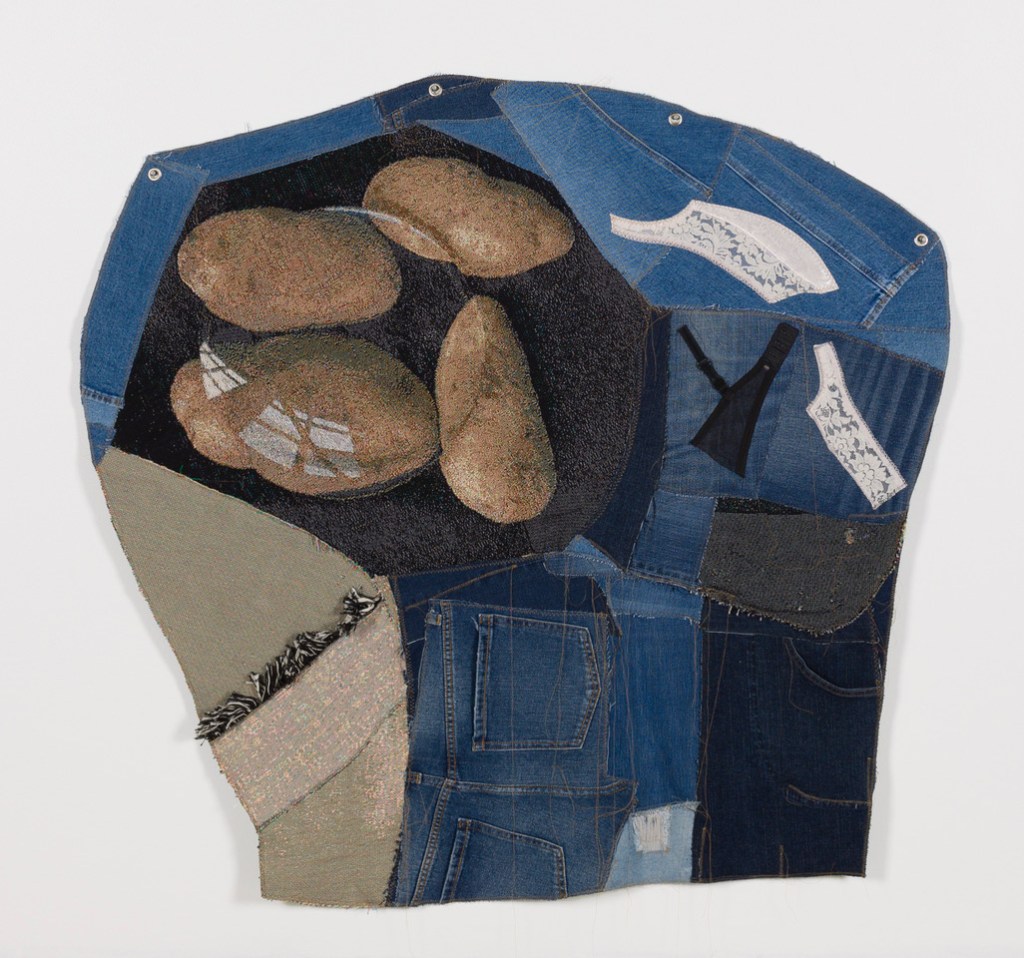
BW: We each selected a piece of our own. I thought first about shape, I am always thinking about shape. The round forms in Paulo’s sculptures turn into each other, they move and morph. I looked for a work of mine that speaks to that. My photographic quilts hang on the wall, low relief like a thick blanket. I chose a piece that has a rounded profile and internal shapes that interlock. A surprise for me is the reverberation between the lumpy potato imagery in my quilt and Paolo’s figuration.
PP: First of all, I’d like to thank Barbara for accepting my invitation to open the series. I deeply admire her practice, and it’s a quiet joy to live with her work—to encounter it each morning in my home.
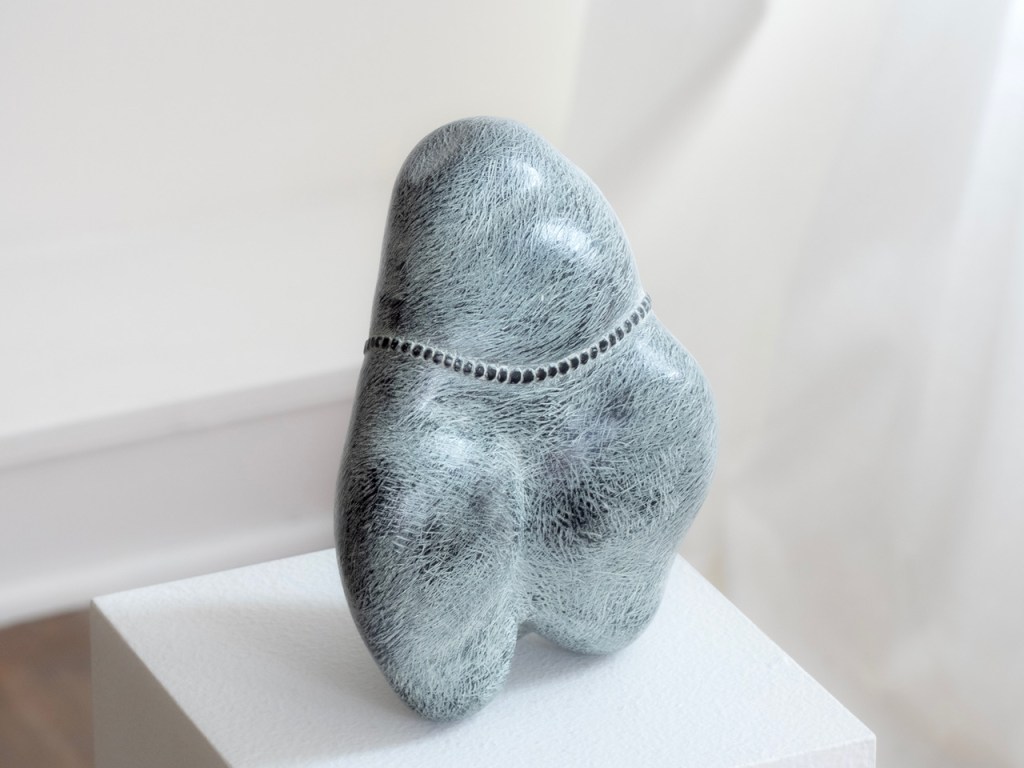
As for selecting the two works, there isn’t a fixed method. I like to think that the artworks themselves find each other through a kind of sympathetic resonance. The sculptural quilt Barbara proposed immediately entered into dialogue with a recent sculpture of mine, Hedone, an organic, biomorphic form traced with a delicate, bracelet-like strand of carved beads.
We’ll discover more of their relationship when they share the same space on Sunday.
“I’m very drawn to the idea of encountering artworks in daylight, and of watching them shift subtly as the hours pass. The morning light is different from the afternoon light, and each moment reveals something new.”
The opening is at 10-4, where most are in the evening. How did you consider how time will shape how viewers see the work?
BW: The day long viewing will offer a leisurely experience, slow looking, and conversation.
PP: I’m very drawn to the idea of encountering artworks in daylight, and of watching them shift subtly as the hours pass. The morning light is different from the afternoon light, and each moment reveals something new.
More broadly, both as an artist and as a person, I feel we are gradually losing the right to slowness. So much of life—and of art—is pushed toward speed, toward quick production and consumption. By opening my home and studio from 10 to 4, I wanted to create a space where there is no rush, where time can stretch a little, and where viewers can simply be with the work.
In a way, it’s also a small nod to where I come from—Torino—and to Carlo Petrini’s Slow Food movement, which has always inspired me: the idea that taking time—whether with food or with art—can be a meaningful, even radical gesture.
The description mentions the domestic setting–whose home is it? Will the setting change in future iterations?
PP: The setting is my home. I recently moved back to Bloomfield, into an old house built in 1904, where I’ve set up my studio in the garage and begun sharing artworks with friends in a more informal way.
The living room opens into what was likely once a sunroom, and that space, filled with natural light, has become a beautiful place to show art.
For future iterations, I like to keep things open. Depending on the invited artist, I can imagine the setting shifting—perhaps moving into different parts of the house, or taking on a new configuration each time.
“My own experience of the two works is something like an antidote to overwhelm. I think people will find pleasure in the focus and time spent with only two works, one from each artist. We chose works that will repay the viewer’s close attention.”
What do you hope people take away from the show?
BW: My own experience of the two works is something like an antidote to overwhelm. I think people will find pleasure in the focus and time spent with only two works, one from each artist. We chose works that will repay the viewer’s close attention.
PP: I hope people leave feeling inspired by the possibility of living with art in their own homes. As I mentioned, art can truly transform the way we experience daily life.
Living with an artwork creates an ongoing relationship—it gathers stories, gazes, and meanings over time, quietly layering itself into our lives. It can even change how we move through a space, how we spend time, how we notice things—sometimes in passing, at the edge of our vision.
Art has a life of its own, and I believe it’s meant to be lived with, not kept hidden away in storage.
“Art has a life of its own, and I believe it’s meant to be lived with, not kept hidden away in storage.”
Can you share anything about the next version of it?
PP: For now, I’m planning the next events in the series with artists based here in Pittsburgh—I won’t spoil too much just yet.
In the near future, I’d also love to invite artists from New York, where I lived before, and perhaps even some Italian artists who could come and create work here in my studio. I like the idea of the project gradually expanding—building connections and opening up a wider community, starting from Bloomfield.
Two Works on Sunday opens on March 22 from 10AM-4PM, with open hours in the coming weeks.
This month’s articles are generously supported by Lewis Hine Pictures America at the Frick. Discover photography’s radical capacity through May 17. Tickets now on sale.

 PETRICHOR
Leave a comment