by Tara Fay Coleman
Photos courtesy of Silver Eye Center for Photography
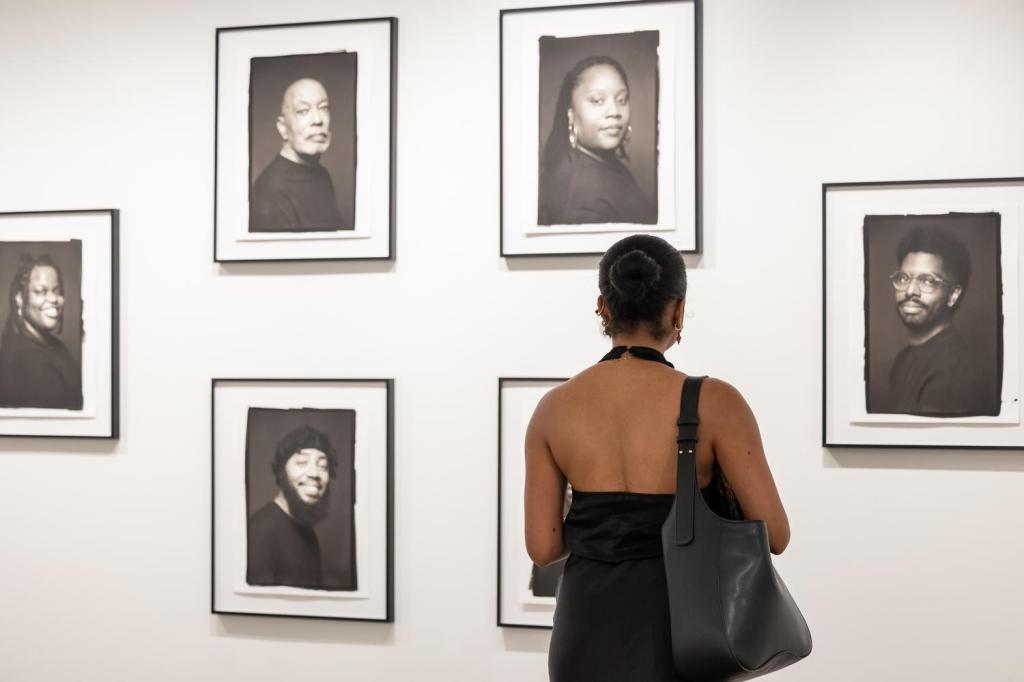
There is a tendency to approach portraits with a question already in mind: Who is this, and what do they represent? In Fierce: Pittsburgh, Ajamu X’s images do not move toward any explanation. A pose feels composed, but not instructional. What’s visible has been decided, but not for the sake of being understood. When viewing this work, I kept returning to what the images don’t give. Which is not to suggest a lack of something, but a condition of the work.
Ajamu resists this idea. For him, the issue begins with the expectation itself. “Every Black queer person has the right to not be legible,” he says, pushing back on the assumption that Black queer life should be immediately understood. What needs to be questioned is not what the image offers, but what the viewer is looking for, and why. It would be easy to describe the portraits in terms of agency, to say that his subjects are given the space to define themselves. He rejects that framing.
“I do not give the sitters any ability to define themselves on their own terms,” he told me. “They always already come with that ability.” His role is not to grant that capacity, but to attend to what is already present, to “capture that encounter, the energy that I sense between us.” That distinction shifts the structure of the image. The photograph does not produce identity, and it does not resolve it outward. It becomes a container for something that exists prior to the image, without translating it into something fully accessible. Ajamu describes Fierce not as a project about identity, but about energy. What connects the portraits is not a fixed category but a sense of relation that moves across people and places.
In Pittsburgh. Black presence in the city is often asked to locate itself within a narrative of displacement, and to account for what has been lost or erased. There is at times a pressure for images to carry that, and to stand in for something larger than themselves. These portraits do not take that on. They do not explain the city, or the conditions around them. They remain with the subject, and within the terms of the image itself. At the same time, the work is not isolated within the local.
Fierce moves across cities, building connections that extend beyond place. Ajamu describes this as a cross-Atlantic diasporic relation, where people appear as “familiar strangers,” linked through something that is felt rather than defined. “Whenever queer Black people are in the world, we are connected,” he says, describing a thread that runs through the work, even as it moves between different cities.
The figures appear as themselves, but also as part of something that exceeds the individual frame. The portraits are grounded in where they are made, but they are not limited by it. What emerges is not a fixed statement of identity. The installation doesn’t try to direct you either. The space is sparse, giving each portrait room to breathe.Nothing is layered in to guide interpretation or fill in context. There’s a clarity to that, and a kind of restraint that lets the work stay where it is. The impulse to understand does not disappear, but it’s not fulfilled, and the images do not offer themselves up as an explanation, nor do they ask to be read in that way.
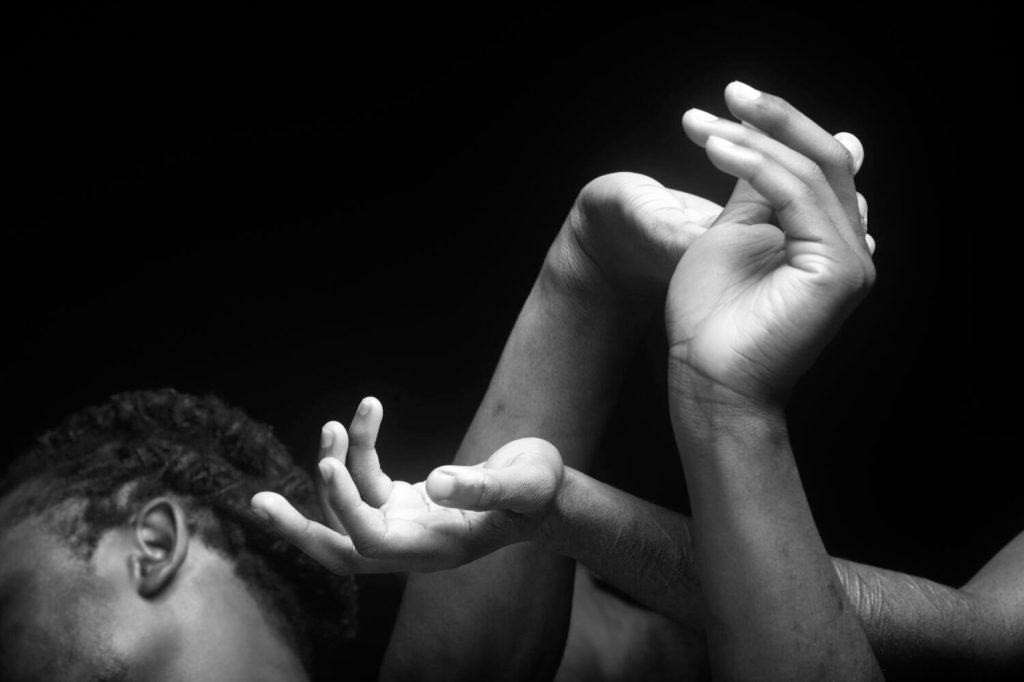
That way of working shows up in the process itself. Ajamu’s use of nineteenth-century photographic processes is tied to a broader interest in material and sensation. He speaks about wanting to feel the photograph, to think about what it means for the image to exist within the paper rather than on its surface. Palladium printing, where the image sits in the fibers, becomes a way of thinking about how bodies can hold memory.
“The body is the archive,” he says, if we understand it as something that carries lived experience. Ajamu returns often to the limits of what photography can hold. Images can capture certain elements, but they cannot fully account for lived experience. He points to the gap between what can be documented and what is felt: the atmosphere of a room, the movement of bodies, the presence of desire. Black queer life, as he describes it, is not fully contained by the image.
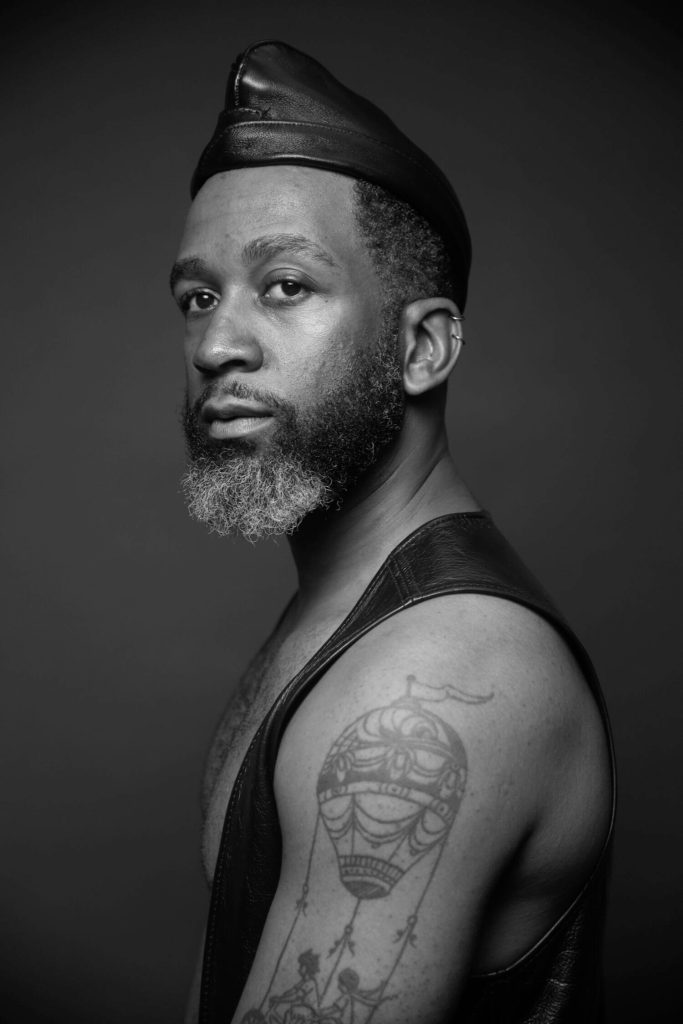
Ajamu considers pleasure central to the work, as a condition of both making and of being. He speaks about the idea of joy, eroticism, and desire as integral to how the images are produced. He compares the process to “foreplay” with his subjects, something that teases and doesn’t fully reveal itself all at once. This practice pushes against the way Black queer life is often framed through lack, or turned into something to be decoded or disciplined through respectability. He names that directly too, the way certain lives or practices, including sex work and kink, are often excluded from what gets archived or considered acceptable, or is recognized within institutions. The work doesn’t organize itself around those exclusions.
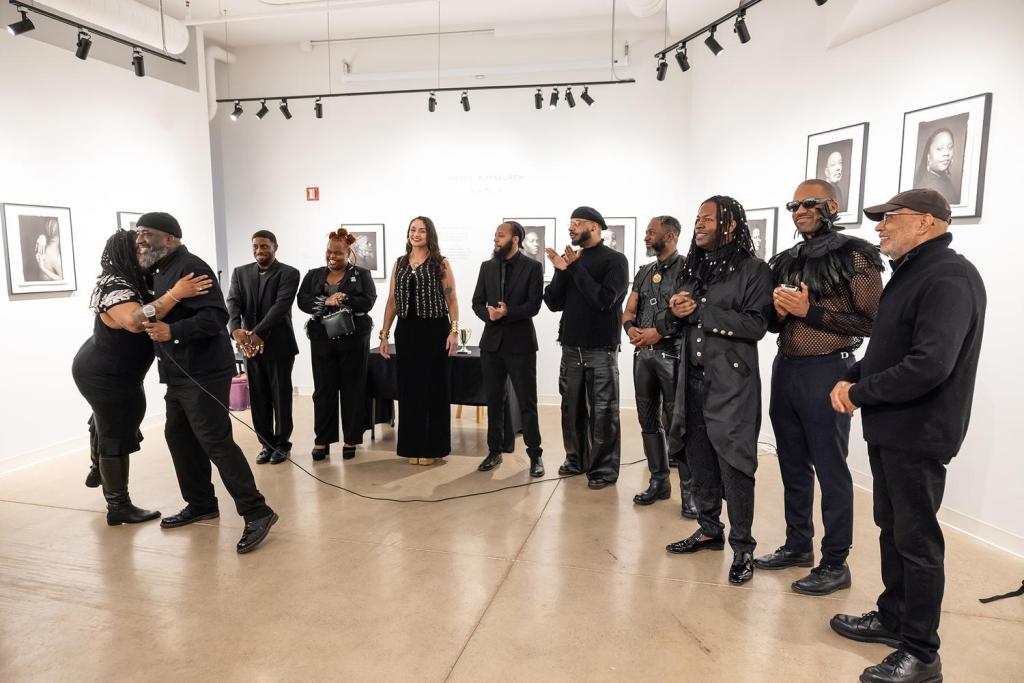
That feels close to how the images operate in that you’re not being told who someone is, you’re brought into an encounter that doesn’t open all the way. This operates as a push against a framework where Black queer experience is flattened or expected to explain itself through struggle. The portraits resist that framing. Instead, they remain with the subject, and with the terms set within the encounter. That encounter is shaped by care. Ajamu is explicit about the responsibility he feels toward the people he photographs. The line between visibility and protection, as he describes it, is not always fixed, but it begins with attentiveness. Someone is giving their time, offering part of themselves. That is not taken lightly. He watches, listens, and remains attuned to how the subject wants to be seen, and how they want to exist within the image.
This sense of care extends to the question of the archive. Ajamu is cautious about how that term is used, especially in relation to Black queer life. Archives, as he notes, have always existed within these communities, but not always in ways that are formally recognized. They are experienced and felt. A flyer from a club night, the sound of music, the movement of bodies, these are also forms of record, even if they resist preservation. Photography becomes one way of preserving something of that experience, but never all of it. There are always elements that remain outside the frame.
Ajamu is clear about what the photograph can’t do, so the archive, in that sense, is always incomplete. Fierce exists for the Black queer people of the future. Ajamu considers the ones not born yet as much a part of this as any of the other subjects, because the archive is about the future. The question is in how we document it now.
FIERCE: Pittsburgh is presented in collaboration with Rainbow Serpent. Rainbow Serpent is a non-profit organization founded by Mikael Owunna and Marques Redd that advances Black LGBTQ culture through the exploration of emerging technologies, innovative healing protocols, African cosmologies, and multimedia art.
As part of this exhibition, Silver Eye is proud to introduce three new works featuring Ajamu X: a portrait by Mikael Owunna; X (Nu/Apuat/Geb), a collaborative cosmological portrait by Mikael Owunna and Marques Redd; and their new short documentary film, Between Us, The Gaze: Ajamu X / FIERCE: Pittsburgh. The exhibition is open through May 2.
Tara Fay Coleman is an artist, independent curator, writer, and cultural worker from Buffalo, NY. Her practice aims to explore how power, race, and history shape what is seen, and what is systematically obscured. Working across art, writing, and curation, she centers Black cultural production that resists dominant narratives, and reclaims the right to self-representation. Rooted in lived experience, her work aims to challenge institutions to confront their exclusions, while creating space for stories long marginalized. Her goal is to always curate with a commitment to presence, complexity, and care, and she envisions cultural spaces where artists are not only visible, but central, and where art fosters joy, connection, and self-determination. Tara Fay currently lives and works in between Pittsburgh, PA, and New Haven, CT.
This month’s articles are generously supported by Lewis Hine Pictures America at the Frick. Discover photography’s radical capacity through May 17. Tickets now on sale.

 PETRICHOR
Leave a comment