
by Savin Kann
My family has always made fun of me for obsessing on a certain topic for years, and then one day dropping it for the next one. These obsessions were always macabre, ranging from the Titanic sinking at three years old to ghosts and the paranormal in my later elementary years. The latter being one that continues today. I have been constantly fascinated with the unexplained and the unknown. Whether it be ghosts, aliens, or cryptids, anything that could be accompanied by a blurry photograph that supposedly contained something not of this earth will always catch my eye. I spoke earlier about how my perception of a lack of “cool” things in Pittsburgh were an offense to me, and this applies to my obsessions stated above. It seemed like Pittsburgh didn’t have enough interesting history for there to be any haunts or mysteries.
From an early age, a trip to Barnes & Noble was always a special treat for me. I began to move from the children’s section to the spirituality one so that I could peek at titles like Weird Pennsylvania, Pennsylvania Ghosts, and Haunted Western Pennsylvania. But I was frustrated that these books were always thinner than the ones that covered a wider, more general location. Of course now I can recognize that this is because they covered a wider area, but back then, this lack of cool for Pittsburgh was unacceptable to me.
My dissatisfaction is what led me to be such a great researcher. Before my interest in the paranormal, I needed to learn every single thing that I could about my previously mentioned hyperfixations, and the researcher in me blossomed along with the rise of the internet. By the time I was eight years old, I was an expert at looking things up online.
By the time that my hyperfixation on the paranormal had reached its peak, my google searches consisted of various modifications on “most haunted places in Pittsburgh”. I fell deeper down rabbit holes that steered me away from various listicle websites into slightly shady forums that never broke away from their original Netscape designs. Here the stories went from the first page results of footsteps with unknown origin and the occasional shadow figure sighted to the extreme. Sleep paralysis, possessions, and physical harm (scratching, biting, burn marks, etc.) were common themes in these forums and with little to no media literacy, my mind couldn’t comprehend that some of these tales could be lies.
I began to get intrusive thoughts of putting myself in the place of these people undergoing hauntings. I would be playing with my friends in their basements and be struck by the image of a ghost walking through me, leaving me paralyzed with fear. I needed to have nearly every part of my body covered when I slept, lest a spirit tried to grab my hand or something like that. I needed to have the crevice where my bed met the wall blocked off with pillows in case any spirits tried to squeeze up from there under my bed. In short, the media I was consuming at that age was probably not the best for my mental health.
The other constant in my life was that my family would always visit the Georgia coastline in the summer. Every summer I would exult in the muggy air occasionally displaced by salty ocean breezes and bike under the dangling beauty of the Spanish moss draped over the various trees. I’d ogle at the mansions composed of any architectural style you could think of. I loved the creepy stillness of the night. I lived in the suburbs of Pittsburgh and was used to the woods, but out in Georgia it was truly quiet and isolated. The croaks and chirps of crickets and frogs filled each night, and the periods of stillness in between each natural noise really made one feel like they were in their own private corner of the world. At night, you can see the stars, something I didn’t realize that I missed so much. I still wish on shooting stars when I see them down there.
While I eventually moved onto the different hyperfixations, they stayed constant in that they always leaned towards the macabre. If I read fiction, it always contained some form of death or crime or haunted house. Bonus points for all three. As the strains of attending a rigorous college prep school began to rise, my interest in reading decreased, but I learned to substitute with the stories I could make in my head. I was at a deeply unhappy place in my life, and while some people would expect me to escape to a beautiful dreamscape where all my wishes and desires came true, I leaned into the drama and the darkness that I admired as a kid. All of the spirits and the grime and the horrors that I had read about before began to converge in the form of little plays and mysteries in my mind.
I never seriously considered being a writer until I was 16, and I dropped that after a few weeks. At that time I didn’t think I could be anything, much less someone capable of seeing a full story come to completion. My writing vision at the time focused on everything I was unhappy about, dissatisfaction and depression. My work of that period focused mainly on creative nonfiction-esque thinkpieces that were never finished and even the parts I was able to write were meandering and unfocused. I have to give all credit to my first year writing seminar professor for truly showing me I could write. Our first major assignment of the semester required us to submit to a website for publication. While my first complete piece that I considered ready for submission is definitely one that I look back at and cringe, it stands as a representation of my first steps to being a writer. It was this professor who first told me about Flannery O’Connor, and in a stroke of luck that night, I found a copy of her anthology in a thrift store while out with friends and immediately fell in love.
When I entered my first creative writing workshop, I was dead set on becoming the next great Southern Gothic writer. Like all writers who look back at their earlier works, I see the words on the page and have to laugh at my misplaced confidence and youthful experimentalism. At the time, I thought Southern Gothic just meant that it was grotesque and dark with a dash of humidity and Spanish moss added in. My first fully realized attempt at writing in this genre was one with bad dark humor, unnecessarily grotesque plotlines, and random connections between spirituality and weather. While I appreciate the lack of experience giving me the gall to try literally anything I could, it’s work that I am not proud of.

My big lightbulb moment was the realization that I didn’t have the lived experience to write Southern Gothic, but I could take the elements of it and apply it to what I knew best, Pittsburgh. In my senior year of high school, I took a History of Pittsburgh course, and in our final semester when we reached a post-steel collapse era of the city my teacher said something that always stuck with me. He mentioned that the atmosphere of the city was one where everyone was asking themselves “What happens now?” and “Who will be the last to turn the lights off?” These lasting images lay the foundation of what I have termed Pittsburgh Gothic.
Imagery that is adapted for the Pittsburgh Gothic invokes images of Pittsburgh’s past. The remains and decaying skeletons of steel factories loom over the city as a reminder of what built this city. Dark woods and swamps are replaced with streets that alternate between abandonment and wealth. No matter how many environmental laws are passed, no amount of cleaning will be able to get rid of the layers of grime within our rivers that contain traces of the past. Pittsburgh Gothic will always aim to analyze the numerous dichotomies of life within this city, and the numerous differences that come with the social and structural challenges of modern living.
Common themes within stories of this genre deal with characters who are searching for a sense of place. Whether they struggle with failed relationships, dead end jobs, or personal uncertainties, it will always be within the context of the history of Pittsburgh itself. Hundreds of years of history and industry have passed and converged to put these characters in Pittsburgh, and while they struggle with their own identity, the city around them does as well. What happens when a city goes from being the “Gateway to the West” to another failed Rust Belt town where industrial blight halved the population and back to being humorously parodied as topping the list of most listed cities by The Onion? From “Hell with the lid off” to a center of education, technology, and culture, Pittsburgh is a city of changes, both recognized and unrecognized.
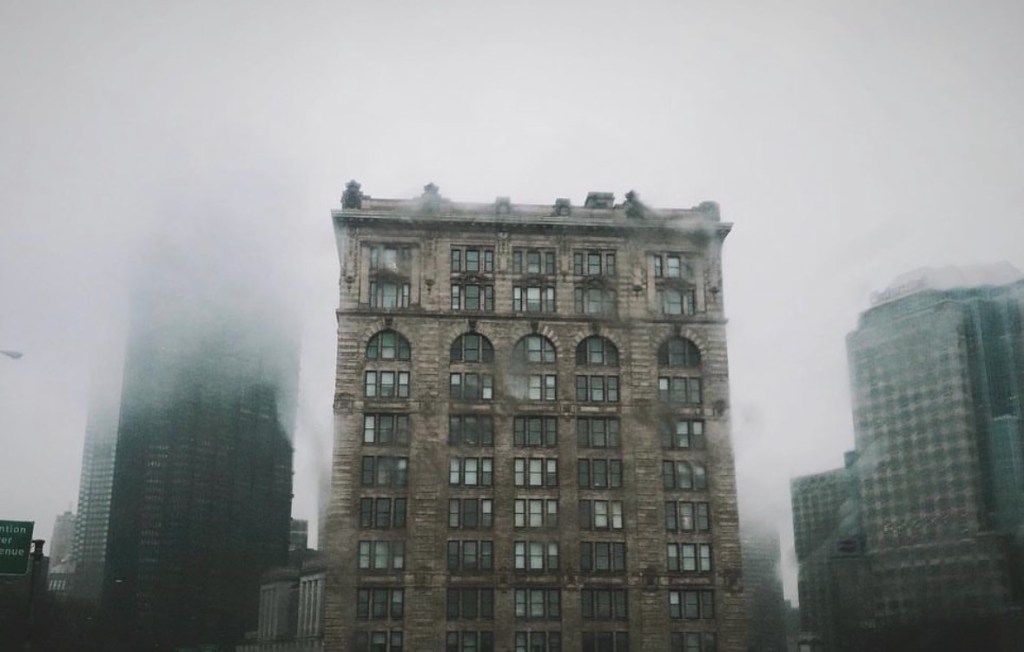
In the writing of Pittsburgh Gothic, I like to see the city as both a cosmopolitan empire, and a gritty underbelly. It’s a place where the pale yellow light of newer apartments and businesses bleed into the windows of dingy studio apartments where someone is trying to figure out who they are. It’s a city where the families of steel workers are given the remains of those who fell into the vats, a small ball that contains what’s left of their loved ones. It’s also a place where the newly rich try to make themselves feel important by ordering themselves the most expensive dish at this week’s chic restaurant.
When I first started writing stories about Pittsburgh Gothic, I did so with a strictly paranormal bent. I had trouble determining the line between magical realism and just straight up magic and paranormal, and the first attempts at magical realism seemed ham-fisted. Now I think that one of the great parts of Pittsburgh Gothic is the creation of an aura of mystery and the power of suggestion as opposed to the outright statement of something paranormal. With these motifs comes just an either initial or learned acceptance of the mystical elements that surround them.
I make Pittsburgh what I want in my stories. I know it seems strange to want all this darkness for my city, but it is used to work through my own issues I have had with Pittsburgh and its people. I can joke around that there is an evil beating heart that sits under Point State Park that draws in every horrible man on the planet with each beat, but I can turn the emotions and feelings behind awful Pittsburgh-based events I’ve experienced like breakups and sexual harassment and process them in the form of stories In the idealized versions of Pittsburgh that I create, real memories meet their match in the form of made-up ghosts. These ghosts of the individual and collective past, whether they are literal spiritual manifestations or the lasting effect of emotional states, serve as the root and main analysis point of Pittsburgh Gothic. They stand over the stories of our city that exist in both reality and fiction, and the genre seeks to remember and honor them.
Savin Kann is an artist and writer from Pittsburgh, Pennsylvania currently based in New York. He got his B.A. from Goucher College where he was a Kratz Summer Writing Fellow for the summer of 2020. His other work includes being a dramaturg and director for a staging of Jacqueline Goldfinger’s The Terrible Girls. His work has previously appeared in Grub Street magazine from Towson University.


 PETRICHOR
Leave a reply to Rebecca Moon Ruark Cancel reply