by Emma Riva
“Daddy, like God, is full of love, the truest kind of love: the kind that has to be interpreted.” This is a line from “Brute Brute Heart of a Brute Like You,” a short story in Playboy by my recently deceased writing teacher, David Burr Gerrard. It’s a line that I have memorized and in my brain forever, because it was so damn good—gutting. When I first studied with David at The New School, I recognized in him the same impulse I had, to write in a way that could gut someone in a single line. His fiction workshop was the first I took in college, in a classroom with no windows in the 16 Street Building. The desks were arranged in a circle and when someone got up to go to the bathroom, it felt like the entire class watched them leave. Returning was equally awkward.
My friend A.J. Vitiello and I met in David’s workshop. We could be snobby. We sometimes said unkind things about other stories in the class over dumplings afterward. We were Good Writers With Ambition. I took my laptop on the subway and wrote underground, or while sitting in parks or microwaving meals in the refurbished downtown Brooklyn hotel turned into “young professional housing” I lived in at the time. I read my now-favorite short story, Nathan Englander’s “What We Talk About When We Talk About Anne Frank,” in that workshop and developed many of the interests that serve my later fiction and journalism, as well as the close friendship with A.J. I still maintain to this day.
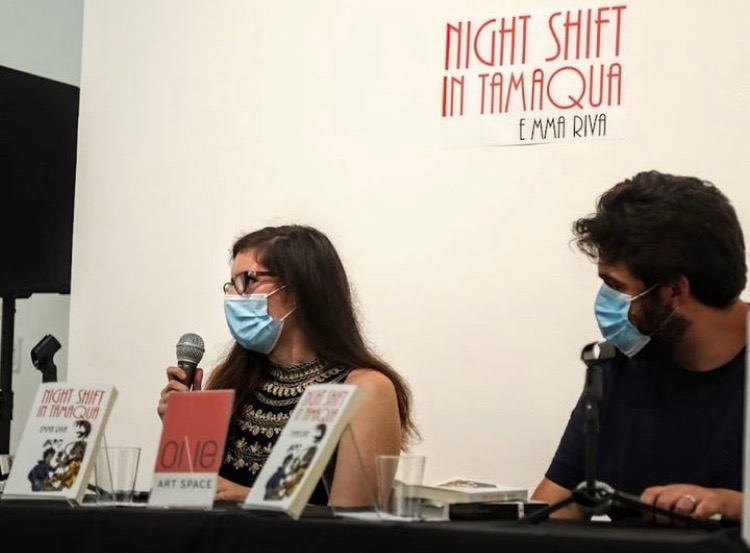
David’s writing pushed boundaries and he appreciated it when we did, too. When he read a short story I wrote about the beauty industry in North Korea, he gave me one of the best compliments I’ve ever received on my writing: “I usually would discourage a student from writing this far outside of their own experience, but you seem to know what you’re doing.” His work never shied away from politics, sex, religion, and existential dread. We connected over a shared affinity and somewhat begrudging respect for David Foster Wallace. Along with the beauty industry story, I wrote another short story about a girl who dates her high school boyfriend’s younger brother, with thinly veiled caricatures of my actual high school boyfriend and his actual younger brother. In David’s class more than any other I took, I learned to follow my interest in transgression and taboo rather than stifle it. David then later moderated the 2021 book launch of my debut novel, Night Shift in Tamaqua.
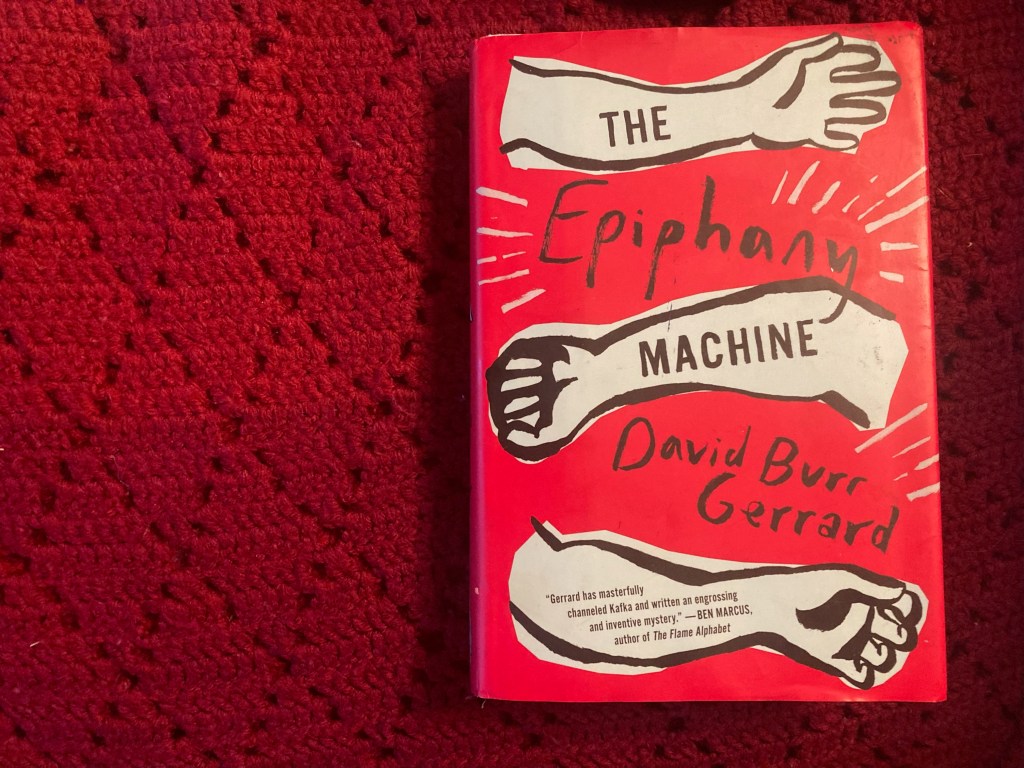
When I learned of David’s passing in December, the only thing I could think to do was to revisit his work. We kept in touch only sporadically over the past few years, but his writing style and instruction was instrumental to the development of my own writing voice. As a tribute to him, I want to share with the readers of Petrichor David’s 2017 novel The Epiphany Machine, which I just reread and loved. The Epiphany Machine is the tale of Venter Lowood, a lost youth who becomes fascinated with quasi-con artist Adam Lyons, inventor of a machine that tattoos people with one-sentence truths about themselves. The machine gave Venter’s father a tattoo that says SHOULD NEVER BECOME A FATHER and his absent mother one that says ABANDONS WHAT MATTERS MOST, so his curiosity about it is understandable. Some people get WOULD RATHER BE RIGHT THAN HAPPY BUT IS USUALLY NEITHER, others DEPENDENT ON THE OPINION OF OTHERS. “Everyone else knows the truth about you–now you can, too” is the machine’s tagline. It’s a dark, complex, but also incredibly funny novel that begins with the following passage:
- “The epiphany machine will not discover`anything about you that you do not, in some way, already know. But think for a moment about surprise. What is surprising is never what is revealed but the grace with which it has been hidden.
- The unexamined life is often entirely worth living. If there is nothing gnawing at you, put this pamphlet down and never think of us again.
- If there is something gnawing at you, that means you’re delicious. That gnawing is the universe trying to get at the tasty juice inside you. Your entire unsatisfying life is just the rind. When you look at our device, think of it as a peeler.”
When I reread the novel, I saved some of my favorite passages from it. Each of these sentences contains a world within its structure and vocabulary, as well David’s wit and heart. Rather than write a review, I want to share these, in hopes that other writers might find them inspiring and interesting, or readers might want to pick up the book themselves. Here you go:
—
“It is also true that [his success] would not have been possible if he had spent much time with me. I’m not sure what we would have done together, other than maybe watch sports neither of us liked. My father did the best he could, which as a description of human behavior sounds like a tautology but is actually true of very few people.” (18)
“Much blood had been spilled into the earth, almost all of it needlessly, and yet there were undeniably times when blood belonged to the earth, and to keep it locked up and sloshing around in the bodies that lurked above it was nothing more than cowardice.” (26)
“After all, there was one more thing she had in addition time: language, the true love of her life, even if she loved language too much to put it quite that way.” (32)
“The conversation I should have never had with Ellen took place at the same grocery store where I had met Nick all those years earlier.” (57)
“There’s more than one person for everyone. But not that many more. You’ve already given God your foreskin, you don’t owe him the rest of your dick.” (81)
“My princess is not the sharpest knife in the drawer, is she, but that’s very good, because a man does not want his woman to be a knife, sharp or otherwise, but rather a drawer, in which he can store what he needs.” (118)
“The machine is a parent for people who think they’re too good for their parents.” (157)
“Thinking, like any other drug, can be a useful distraction from pain, so long as it’s carefully managed and does not become an addiction.” (164)
“Very rarely does life give you unambiguously positive feedback; in fact, I’m not sure that such feedback comes in any form other than oral sex.” (188)
“I was fulfilling the sacred duty of lovers and Americans: Getting Better.” (189)
“For the first time in my life, my body felt like something more than a duffel bag for my neuroses.” (228)
“People who insist on seeing me as a monster should remember that Van Helsings come and go, but Dracula lives forever.” (271)
“Unfortunately, sitting at home with my laptop turned out to mean reading blog posts about the problematic portrayals of women in popular culture in one tab and watching porn in another.” (370)
“Why should anyone feel humiliated because of who they are? If you WILL SPEND ANY AMOUNT OF MONEY TO FEEL COOL FOR A FEW MINUTES, then be proud of that. Be proud of the money you’re funneling into the industries that are supporting your feeling cool for a few minutes, whether that’s the fashion industry, the alcohol industry, your local cocaine dealer, the independent bookstores from which you buy a ton of novels you never read, whatever it is. Be proud of the fact that you value that feeling of connection to a community over the pointless, probably incoherent ideal of personal integrity you might think you should value. Don’t feel ashamed of your behavior, unless your epiphany tells you that you CANNOT STOP FEELING ASHAMED OF OWN BEHAVIOR, in which case you should take pride in the fact that you’re ashamed. Shame is basically hypocrisy redirected against yourself—it’s holding yourself to a higher standard than you’re capable of meeting, rather than holding other people to a higher standard than you’re capable of meeting. So be proud of yourself for reaching for that standard you can’t meet, and be proud of beating yourself rather than other people up over that standard! And if you are a hypocrite, if what’s on your arm is EXHORTS OTHERS TO COMMITMENT AND FIDELITY BUT CANNOT STOP SENDING DICK PICS, then take pride in the happiness you’ll bring to anyone whom you inspire to achieve commitment and fidelity.” (383-384 – this one is long, but isn’t it so good?)
“Then I returned to my laptop and stared into the infinite space of which I was some kind of ridiculous little king.” (382)
—
What I love about The Epiphany Machine is that it takes a deeply-felt but deeply illogical anxiety many of us experience—that there is something deeply wrong with you and if anyone gets too close to you, they’ll find out—and follows it to its logical conclusion. It plays with the cynicism baked into contemporary life and the universal need for not just the love of parents and partners but approval and validation. We feel pathetic for depending on that validation, but so many of us do. It’s a brilliant book. David was a brilliant writer and a great teacher. Just as he wrote in that first paragraph to The Epiphany Machine, David taught me that the gnawing inside of me meant there was something in there worth consuming.
The Epiphany Machine is available from Penguin Random House, AbeBooks, Amazon, or your local library. David Burr Gerrard’s family has asked for donations to the Jacob Burns Film Center in Pleasantville, NY in lieu of flowers.

 PETRICHOR
Leave a reply to Rebecca Moon Ruark Cancel reply