by Emma Riva
Danielle Goshay’s Together We Name the Shadow announces itself from the moment a visitor walks into Botom Feeder Books. The show’s title fills half of a wall, almost as an invitation to consider how the work abstracts expected images. Who’s to say that those letters on a wall make their assigned meaning? To someone unfamiliar with Latin script, it’s nothing but a squiggle. The title is that same question reworded—collective groups decide meanings, give things names like the Biblical Eve and the animals in the garden. Is a shadow the same as the object that created it? Or does it have its own unknowable name?
Goshay’s invocation of the shadow isn’t just a metaphorical one, either. She works in the form of the photogram, where an artist makes images on photographic paper without a camera. The artist will place the objects on top of the light-sensitive material, then let the light create exposure. The photogram takes the camera out of the equation entirely, as fiction and nonfiction create narratives out of words but poetry inverts them. There’s a poetics to Goshay’s photograms, central themes that emerge even from inscrutable abstractions. Curator Darian Razdar, who worked closely alongside Goshay throughout the show’s development, is also a poet, so some of that sensibility may come from Razdar, as well.
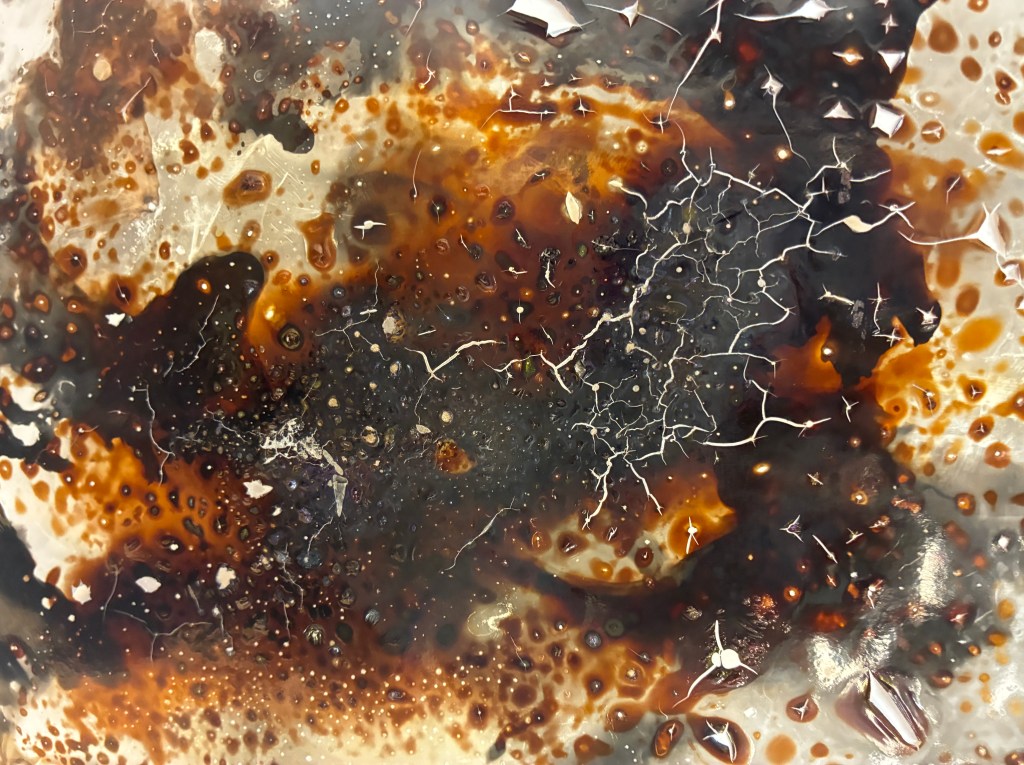
Goshay cites Martinique-born writer and theorist Édouard Glissant’s theory of “the right to opacity” as an influence, and that influence shows up in how the images refuse to be classified. They are not paintings, digital photographs, film photographs, drawings, or anything else. They just simply are.
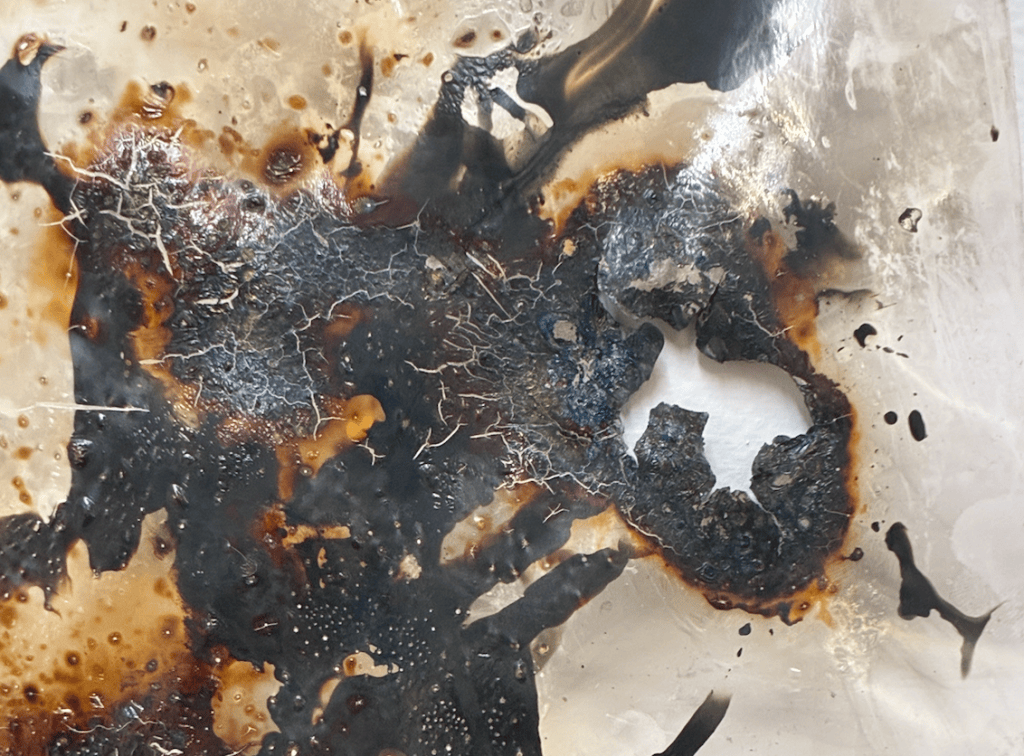
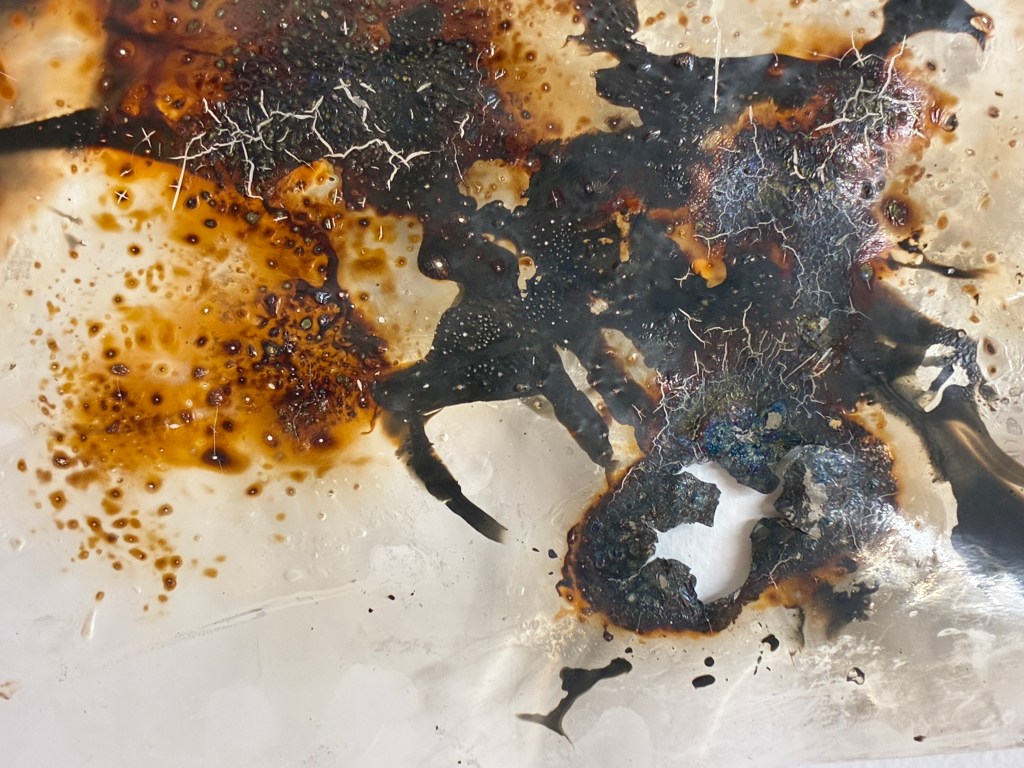
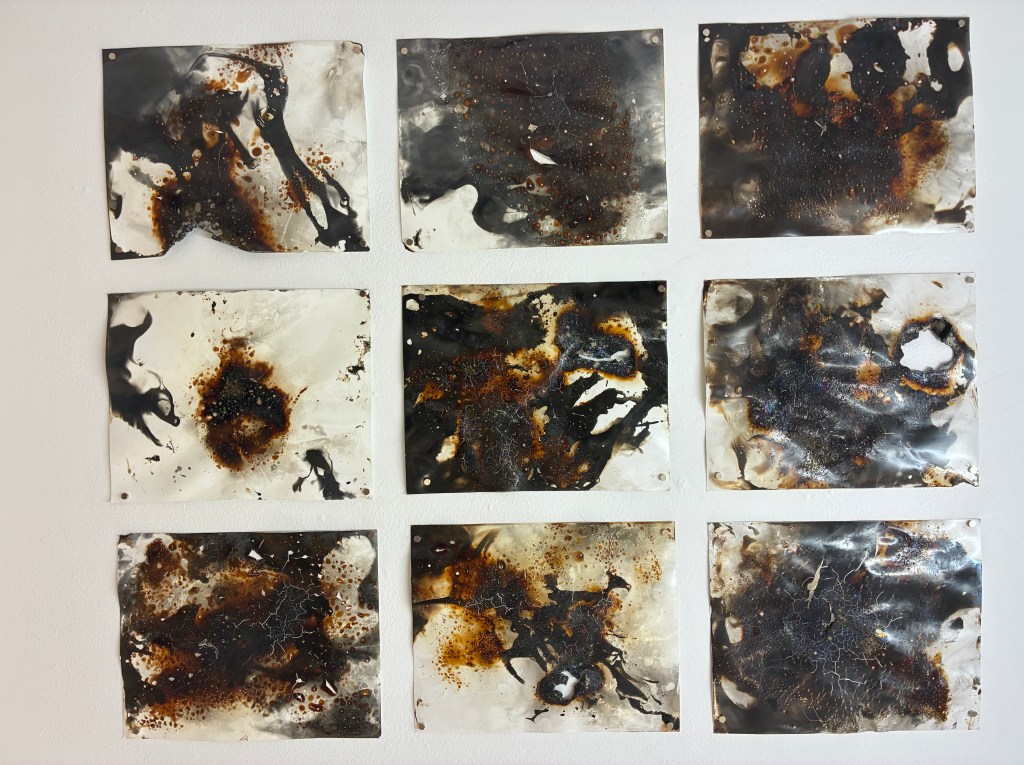
In an age of constant image reproduction, Goshay creates images that cannot be reproduced. They’re true ephemera, surrendered to the process. Goshay is a wheatpaste street artist as well, and that element of her practice comes across even in her images on the wall of a gallery, that they are not meant to be stagnant or permanent. I was particularly struck by the charred prints labeled Fire (2024), where flames created cracks and bubbles mirroring the fissures of the earth. The installation of those smaller works together in a grid allows the viewer to really sit with them.
This is Goshay’s first solo exhibition in a commercial gallery after many group exhibitions across Canada, the United States, and Europe. There’s a quality in the show that she’s taken the time to find her vision and allow her work to breathe.
In the artist’s statement, she refers to her work as “ritual experiments” and writes that “My fascination with alchemy lives through my image-making process, generating intricate and abstract forms that invite viewers’ interpretations, akin to pareidolia, the phenomenon behind Rorschach’s inkblot tests.” She finds a middle ground between images that have a strong vision but also allow a lot of room for that interpretation. I saw in her work the experimental filmmaker Stan Brakhage, but also the abstract expressionism of Helen Frankenthaler and the minimalism of Agnés Martin.
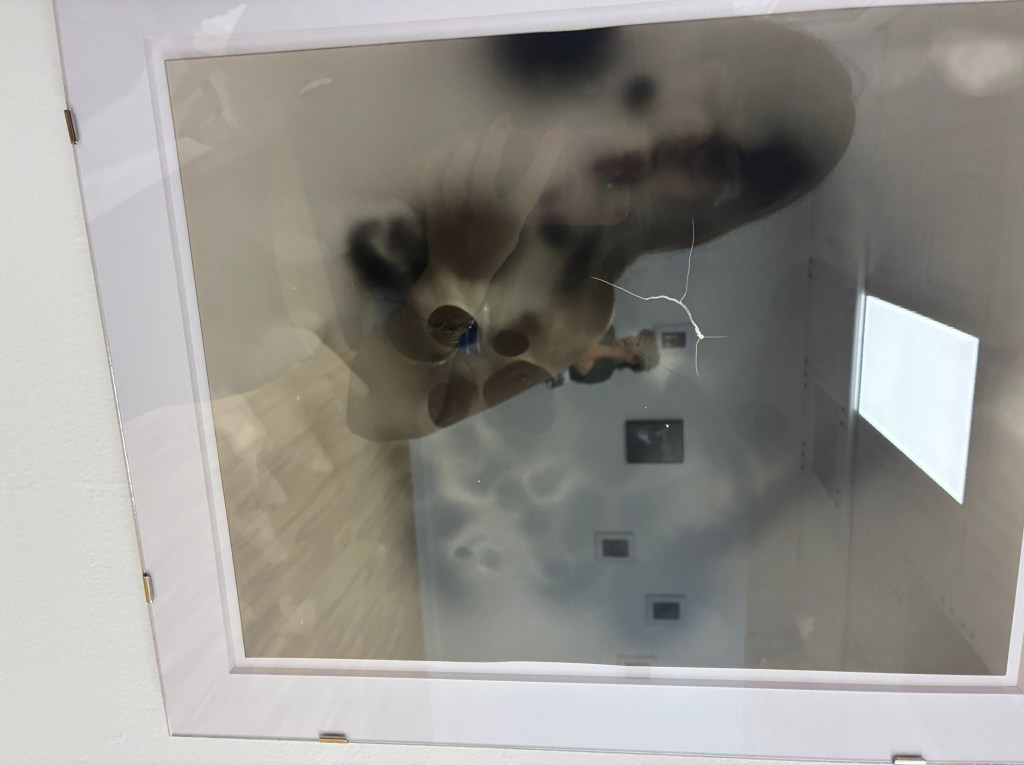
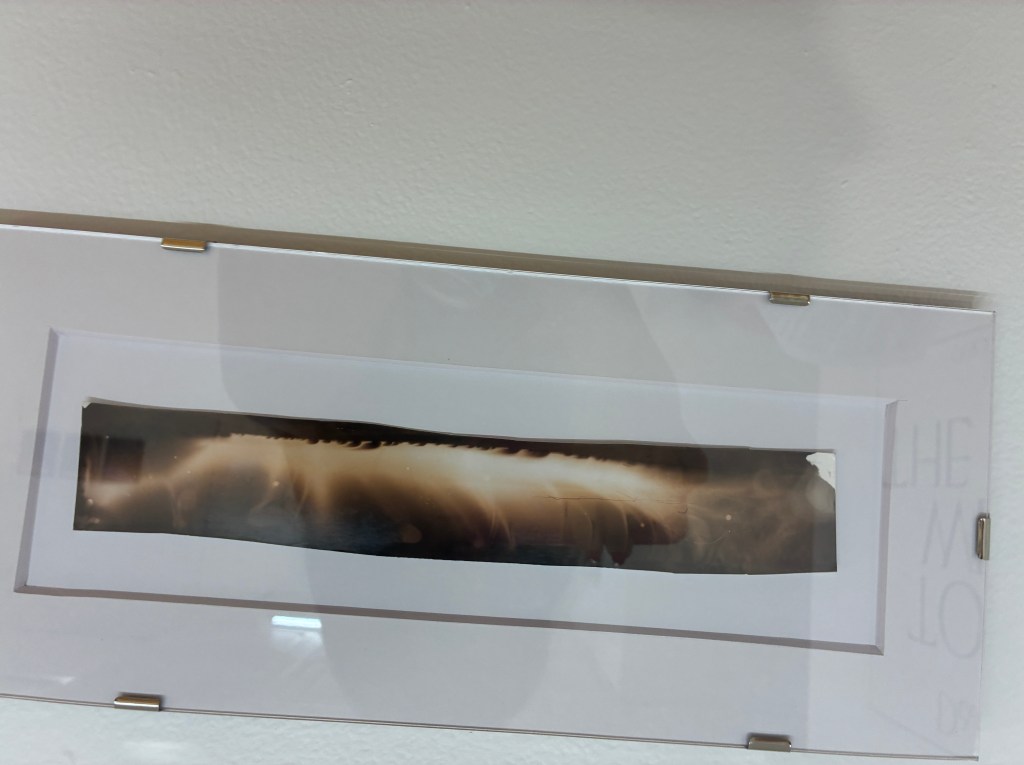
In one corner, a strip of an Aurora borealis like image slashes across the white space. Soft smears make question marks and semicolons above the horizon. In Horse (2024), a slash of negative space is a distinct white from the white creases of the paper. Razdar noted that for many of her larger photograms, Goshay prints and folds paper herself at a public library. There’s a tactile nature to what she’s created, which is interesting to examine because any human forms or figures. That could be the shape of the universe, something which can tough but does not have hands, where holes or cracks are not flaws but part of everything. I was reminded of Leonard Cohen’s “Anthem”: “There is a crack in everything / That’s how the light gets in.”
Emma Riva is the founder of Petrichor.
Danielle Goshay’s Together We Name the Shadow runs at Bottom Feeder Books (415 Gettysburg Street) through 26 September, 2026 and continues its run in Torotonm, ON at Contact Photography (80 Spadina Ave, #205) opening on 29 October, 2026 and running through 26 November 2026. The exhibition is produced in collaboration with Darian Razdar and art historian Nicholas di Benedetto, both of whom contributed essays for the exhibition’s catalogue.
Order Petrichor’s very first print issue or subscribe for four issues a year.



Leave a Reply